Single-Tenant vs. Multi-Tenant SaaS Deployment
Multi-tenant saves money but single-tenant wins on security and compliance.
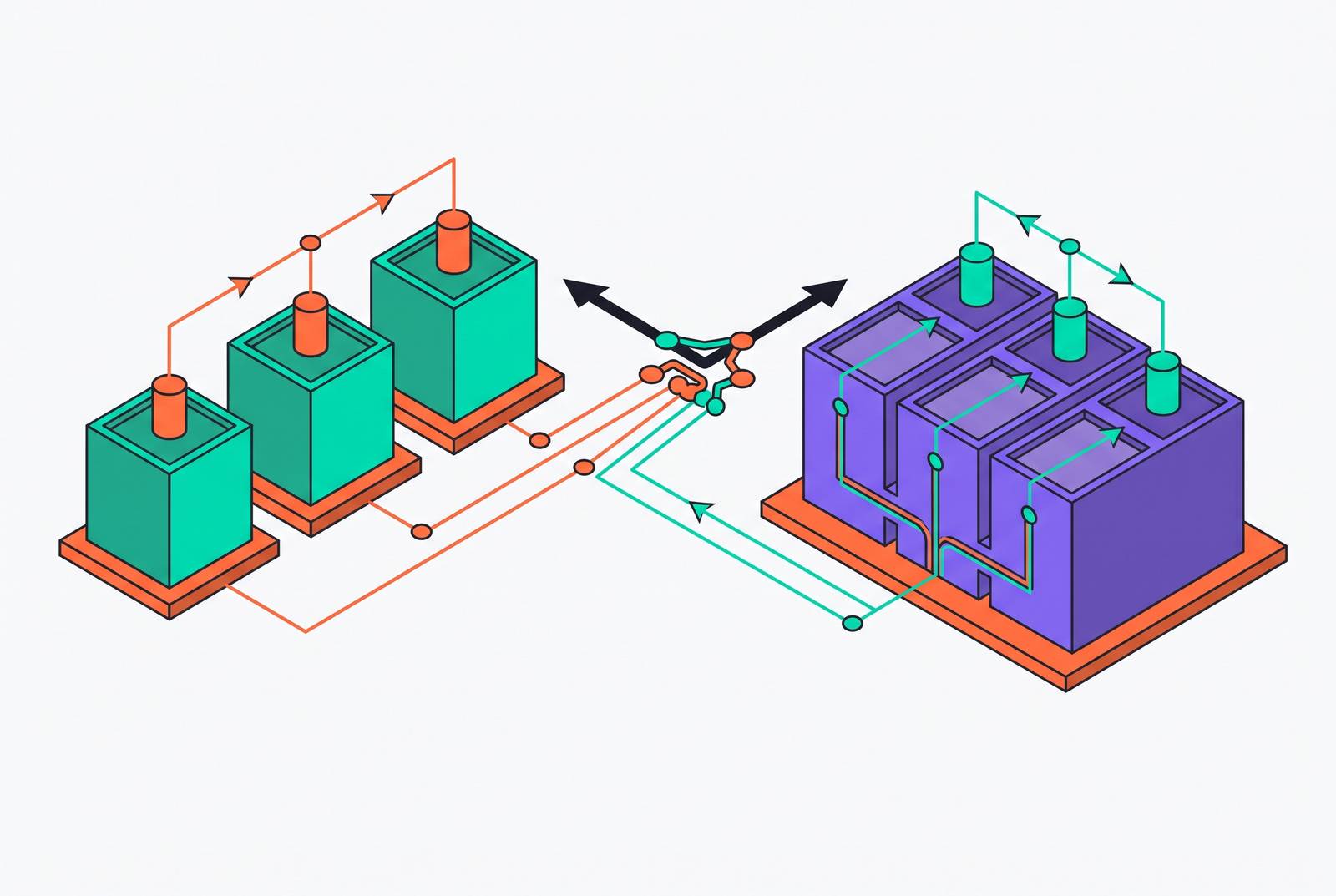
Choosing between single-tenant and multi-tenant SaaS architecture comes down to five tradeoffs: cost, security, scalability, compliance, and how much operational pain a team can stomach. Get the call right and the product scales without drama. Get it wrong, and the foundation needs rebuilding while the house is already full of tenants. Most teams default to multi-tenant because it's cheaper and faster to ship, and that default is correct far more often than any enterprise sales team wants to admit. It's wrong exactly once: when compliance or a noisy neighbor forces the issue, and by then the fix is expensive.
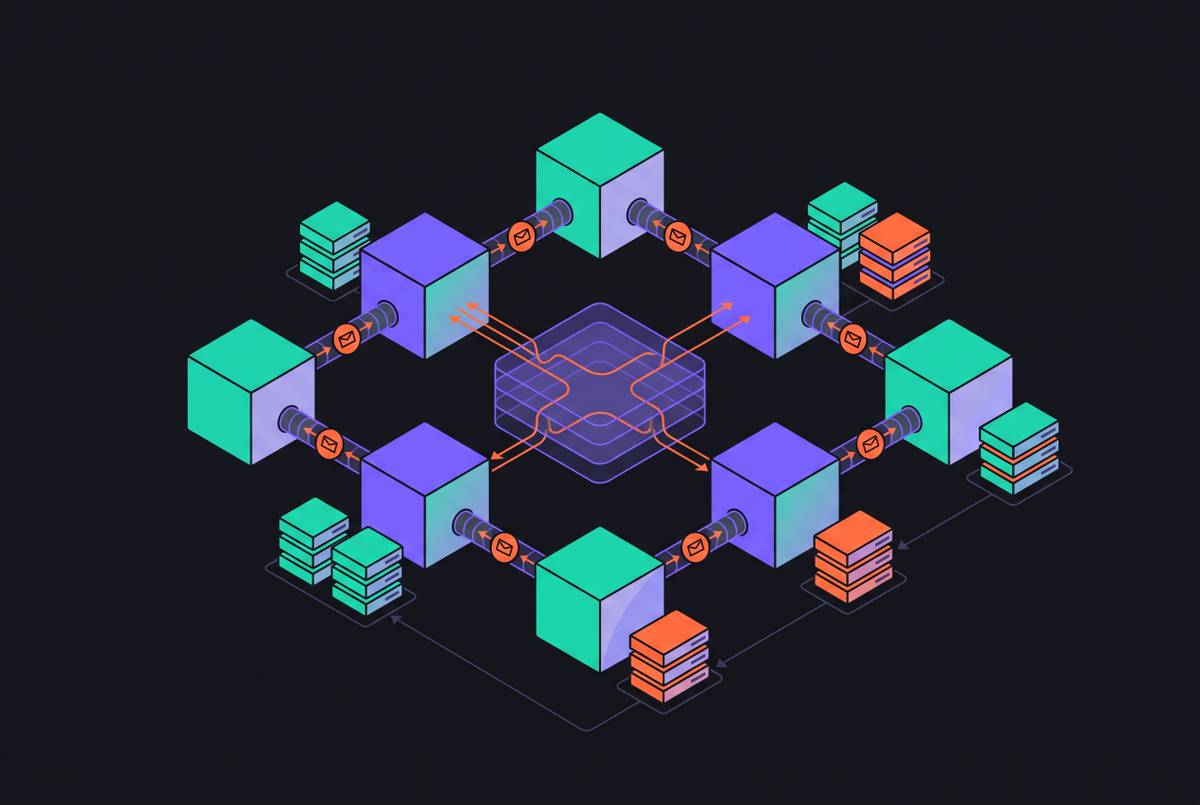
Picture an apartment building. One roof, one boiler, one set of pipes running through the walls, but each unit has its own lock and its own mailbox. That's multi-tenant: one application, one database (or a database split many ways), serving every customer at once. Tenants sit side by side, kept apart by a tenant-ID column, a separate schema, or a row-level security policy instead of a physical wall. Gmail works this way. So does Slack, Shopify, and Google Drive. Anyone reading this is already a tenant in several buildings and probably never noticed the neighbors.
Single-tenant flips the model into a private house. Each customer gets their own instance, their own database, their own everything, and nobody else's data ever sets foot in that environment. Some of the largest enterprise software vendors offer dedicated single-tenant deployments that run this way. Onboarding means building a new house from scratch: new server, new database, sometimes a dedicated subdomain, before the customer has paid a single invoice.
Neither model is one fixed thing, and most conversations about this pretend otherwise. Multi-tenant ranges from a single shared schema (cheapest, riskiest) to separate schemas per tenant, to a dedicated database per tenant sitting on shared compute (pricier, safer). Plenty of vendors land somewhere in the middle, running a shared application layer while carving out isolated storage for the customers who pay extra for it. The stakes are real: the global SaaS market sat at $408.21 billion in 2025 and is on track for $465.03 billion in 2026, growing at a CAGR of 13.61%. That's a lot of buildings, a lot of houses, and a lot of money riding on picking the right one.
Why most SaaS vendors default to multi-tenancy
Money is the whole story. When infrastructure gets split across every customer instead of duplicated for each one, the cost per customer drops as the customer base grows. One well-provisioned shared database costs a fraction of running dozens of small isolated ones at the same total scale, and shared setups can cut operational costs by as much as 40%. That savings shows up on the customer's invoice too, which is exactly why multi-tenant pricing wins in crowded B2C and SMB markets.
It also makes engineering life simpler. Ship a patch once, and every tenant gets it at the same time. No rollout schedule, no chasing down which customer is still running last year's build, no support rep stuck debugging three different releases at once because everyone runs the same code. For a vendor with hundreds of clients, skipping that per-instance patch cycle saves a real chunk of engineering hours every year.
Speed matters too. A new signup drops straight onto existing infrastructure: no provisioning delay, no waiting on a server to spin up. Scale the shared database or add compute, and every tenant benefits at once instead of running that exercise customer by customer. It's no accident that Microsoft and Salesforce both lean on multi-tenant architecture as their default. Cheap and fast isn't the same as right for everyone, though, and what multi-tenancy costs in security and control is a real bill, not a footnote.
Where multi-tenancy creates real risk: security and the noisy-neighbor problem
Here's the uncomfortable part. Because every tenant's data sits in the same system, a bug in the authorization logic, one bad line in a permissions check, can leak one customer's records into another's view. Row-level security, tenant-ID columns, and schema separation all help. None of them offer a zero-failure guarantee, and the more layers of isolation logic a system needs, the more places that logic can break. The actual argument against multi-tenancy centers on something other than inherent design insecurity. It's that its security depends on code written correctly every single time, forever, by whoever touches that codebase next.
Then there's the noisy neighbor. Compute and database I/O are finite resources shared across every tenant on that instance. One customer running a heavy batch job at 2am, or getting hit with a traffic spike from a product launch, can slow down query response times for everyone else sharing that box. Rate limits, query quotas, and connection pooling contain the damage, but each one adds a layer of operational complexity and none of them fully solves the problem. It's the SaaS version of a downstairs neighbor practicing drums at midnight: everyone else on the floor pays for it, and nobody agreed to that deal.
Compliance turns the pressure up further. A meaningful share of enterprises walk away from multi-tenant systems specifically because of regulatory requirements. Major compliance frameworks don't ban shared infrastructure outright, but they impose requirements around data controls and residency that get harder to satisfy once tenant data is interleaved in one schema. GDPR brings cross-border transfer rules and the right to erasure, both messier when a customer's data sits mixed in with everyone else's. HIPAA requires Business Associate Agreements and access controls that plenty of multi-tenant systems weren't built to handle out of the box. For healthcare, finance, legal, or government buyers, the savings from a shared system get eaten alive by the compliance engineering needed to make regulators comfortable with it.
Where single-tenancy earns its higher cost
Single-tenant security doesn't depend on a policy working correctly. It depends on the fact that another tenant's data was kept out of the room to begin with. No access-control rule has to fire perfectly every time, because physical separation does the job instead. Customers can bolt on their own security tooling, their own role-based access setup, their own authentication flow, all without touching anyone else's environment. For a buyer whose regulator wants proof of isolation, single-tenancy hands over a much simpler story to tell, and that simplicity is worth real money to the right buyer.
Customization goes deeper too. Enterprise buyers routinely need custom data models, unusual integrations, or configuration quirks that a shared codebase can't accommodate without either building a universal setting for it or maintaining a fork. Single-tenant removes that tension: change the environment however the deal requires, and nobody else's instance even notices. ServiceNow runs this exact model, a separate instance per customer, specifically to prevent data mixing between clients. SAP's Single Tenant Edition of S/4HANA offers the same kind of industry-specific depth, up to a defined limit.
Performance stays predictable too, since there's no shared compute to fight over. Whatever resources the tenant paid for are theirs, full stop, no matter what another customer is doing overnight.
None of this comes cheap. Every new customer needs infrastructure built before they've paid a dime: server, database, monitoring, the works. Patches and security fixes get applied instance by instance, which for a vendor with dozens of enterprise clients turns into a serious ongoing engineering bill. Onboarding takes longer too, since providers and customers often have to configure the environment together, stretching out the sales cycle. Single-tenancy earns its cost in exactly one setting: high-value enterprise deals where the buyer needs control and auditability, and where the contract is large enough to absorb the overhead. Outside that setting, it's an expensive way to say yes to a customer who probably didn't need the isolation anyway.
The five dimensions that actually drive the decision
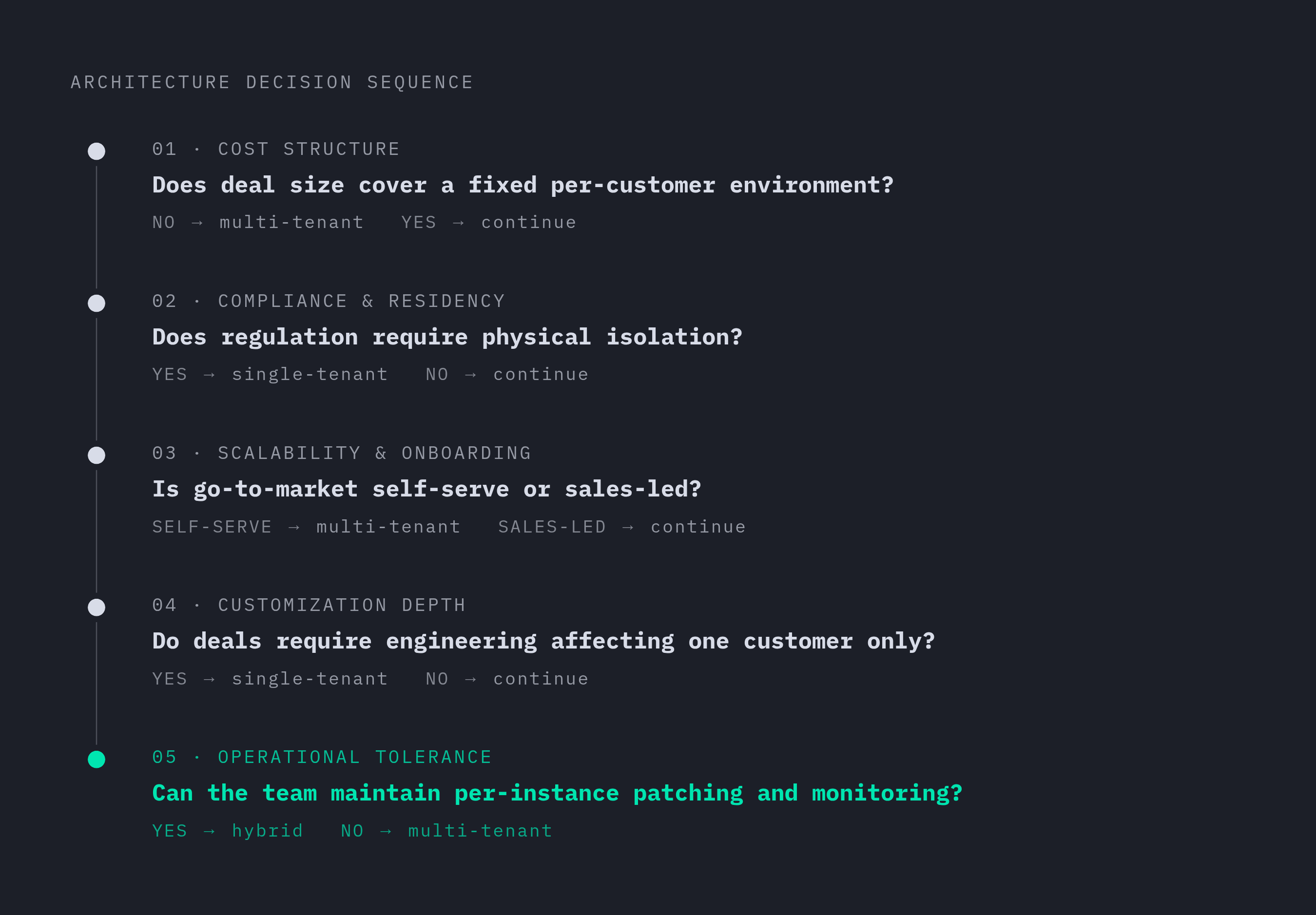
Five questions settle most of this argument.
Cost structure. Multi-tenant costs shrink per customer as volume grows, which favors high-volume, lower-price products. Single-tenant costs stay fixed per customer no matter the scale, so it only makes sense when the contract value covers that fixed cost. Ask what the target deal size actually is, and whether it can absorb running an isolated environment.
Compliance and residency. If the buyers live under HIPAA, strict GDPR residency rules, FedRAMP, or financial regulation, the compliance work needed to make shared infrastructure acceptable gets heavy fast. Single-tenant environments are just easier to certify and audit against these standards. Ask whether the buyer's compliance team needs actual physical isolation, not just a logical separation policy on paper.
Scalability and onboarding speed. Multi-tenant lets new customers sign up and start using the product in minutes, which matters for self-serve growth and product-led acquisition. Single-tenant means provisioning lag, something enterprise sales cycles absorb easily but self-serve funnels cannot. Ask whether the go-to-market motion is self-serve or sales-led.
Customization depth. SMB and mid-market buyers generally accept a standardized product with a few configuration knobs. Enterprise buyers often want environment-level changes, custom integrations, and custom reporting that a shared codebase can't support without fragmenting. Ask whether deals require engineering work that would only ever affect one customer.
Operational tolerance. A solo founder or a five-person team is going to struggle running per-instance patching and monitoring across dozens of single-tenant deployments without dedicated DevOps help. A larger engineering org can absorb it. Ask honestly what the team can actually maintain, not what looks good on a roadmap.
Switching architectures after the product has scaled, moving from multi-tenant to single-tenant or back, ranks among the more expensive migrations a SaaS company can take on. Getting close to the right answer early beats optimizing for the flexibility to change your mind later. Most teams get this backwards: they pick multi-tenant for the early cost savings, then get blindsided when the first enterprise deal asks for isolation the architecture was never built to offer.
How the hybrid model resolves the tension for products that serve both segments
Plenty of products don't have to pick one house or one apartment building. They run a shared application layer, the same codebase, the same compute, for most customers, and carve out a dedicated database or isolated compute tier for the specific tenants who need it. Enterprise buyers get real isolation. SMB customers keep sharing infrastructure. Nobody has to fork the product to make both happy. Often this shows up as a premium tier on the pricing page: a "dedicated instance" or "private cloud" option priced to reflect what that isolation actually costs to run.
Hybrid earns its keep in a few specific situations. A product with solid SMB traction moving upmarket toward enterprise buyers who demand isolation is the classic case. So is a healthcare platform serving a mix of HIPAA-covered clients and clients who aren't covered at all, where blanket single-tenancy would be overkill for half the customer base. The same logic applies to a product trying to offer compliant data residency to customers in a certain region without duplicating the whole platform.
Building this carries real costs. The application layer has to handle tenant-aware routing, per-tier configuration, and potentially different data access patterns depending on which tenant is asking. That's a genuine engineering lift, not a checkbox someone ticks in a sprint planning meeting. But the economics work out: the roughly 40% cost advantage that comes from running at multi-tenant scale is what funds the engineering investment needed to offer that dedicated tier to the enterprise accounts willing to pay for it.
What architecture choice means for the backend systems that support it
Authentication looks different depending on which house the product lives in. Multi-tenant systems have to enforce isolation on every single request: tenant ID propagation, row-level security, organization-scoped permissions. All of it is load-bearing, not optional. Single-tenant systems get structural isolation for free, but every instance still needs its own SSO setup, its own role configuration, its own session management, provisioned and maintained one at a time. Either way, at scale, an auth system built around organizations and tenant hierarchies from day one beats one bolted onto a plain user table after the fact.
Billing tells a similar story. Multi-tenant products can run usage-based billing and subscription management once, against one unified customer record, with every tenant's metered usage and invoice flowing through a single system. Single-tenant environments either need their own billing setup per instance, or the vendor has to build a centralized billing layer that reconciles across every isolated environment, which is its own synchronization headache. Tax compliance and merchant-of-record obligations apply either way, but a vendor running single-tenant deployments across multiple countries hits the same jurisdictional mess in billing that it hits in data residency.
Analytics is where the tradeoff shows up most clearly. Multi-tenant keeps all usage data in one place, so cross-tenant analysis, cohort comparisons, and feature adoption numbers are a straightforward query away. Single-tenant scatters that data by design, so getting one unified view across customers means building an aggregation layer that reaches into every isolated environment, adding both infrastructure and lag. For AI-native products specifically, tracking model feedback, usage telemetry, and inference cost per tenant means the analytics layer has to stay tenant-aware no matter which architecture sits underneath it. The database can be one house or a hundred. The bill for understanding what's happening inside it doesn't change either way.