MCP vs LangChain for SaaS Backend Tool Integration
MCP standardizes tool access while LangChain orchestrates reasoning—each solves a different problem.
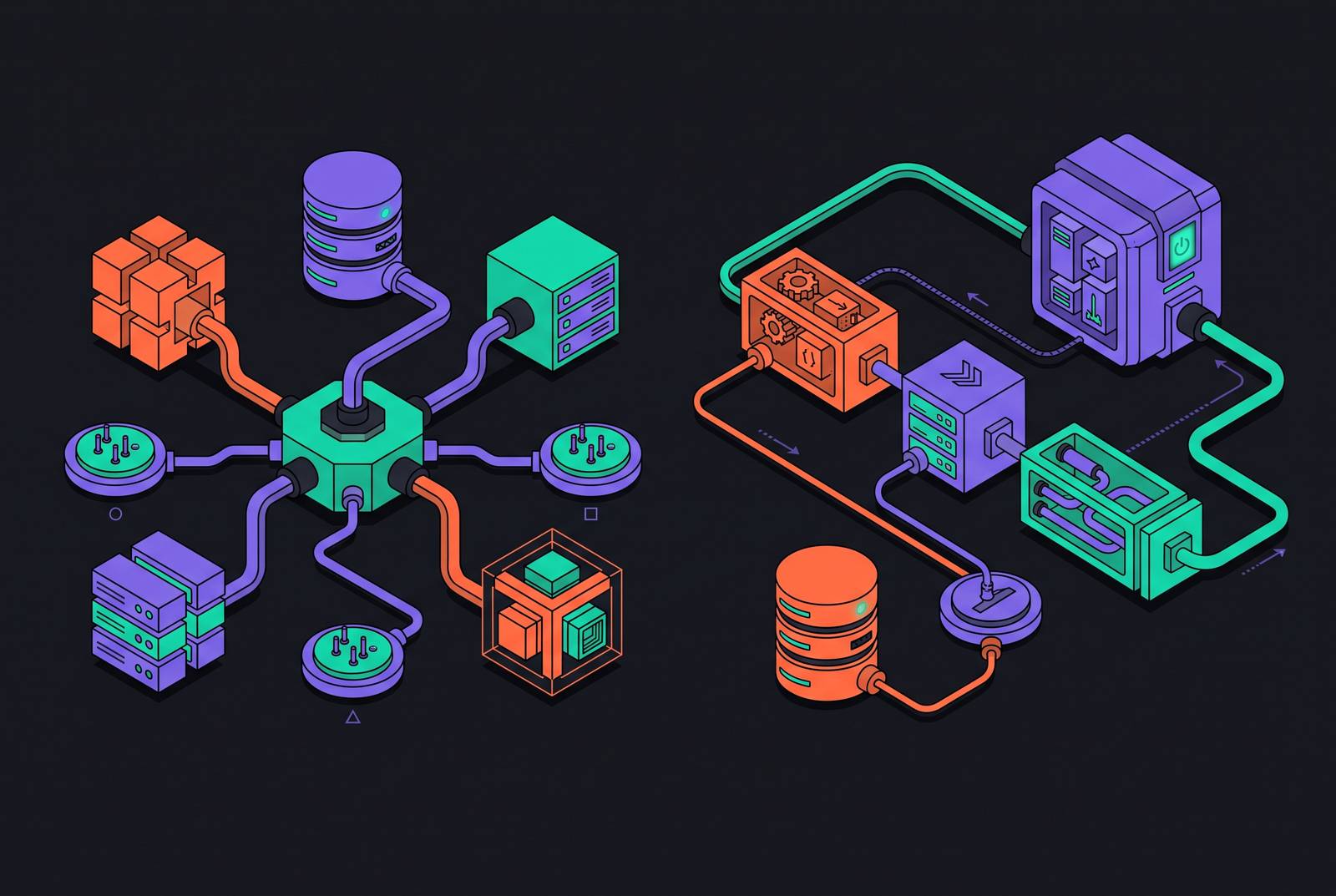
MCP vs LangChain is a question about two different jobs in a SaaS backend. MCP standardizes tool access, while LangChain manages the reasoning around tool calls. Tiun. addresses a separate need by unifying the backend data and services those tools reach. The right architecture uses only the layers the product needs and makes sure billing, tenant isolation, and governance are covered.
Why MCP and LangChain are not competing for the same job
The rivalry framing confuses tool access with the logic that uses it. An agent may need a standard way to reach a customer database, a reasoning loop that decides what to ask it, or both. Comparing MCP and LangChain as substitutes therefore starts the decision on the wrong floor.
MCP is a communication protocol built on JSON-RPC 2.0 that defines how agents discover and invoke external tools. LangChain is a Python/JS orchestration framework that handles chains, memory, and the decisions about those calls. The clean distinction is that LangChain tools live inside the application, while MCP tools live outside it as standalone server processes discoverable by compatible clients. The familiar “USB-C for AI” metaphor captures that portability, but a socket does not decide what to plug in next.
What MCP actually standardizes and why that was missing before
Before MCP, every LLM vendor had its own function-calling format, so each vendor needed its own tool definitions. MCP makes those definitions vendor-neutral, replacing M×N custom connections between models and tools with M+N protocol connections. Anthropic introduced MCP in November 2024, and OpenAI subsequently adopted it.
MCP servers expose tools through stdio for local execution and Streamable HTTP for remote communication. SSE was a legacy transport and has since been deprecated. The client handles the call without needing to know the server’s internals. When it connects, it calls tools/list to find the available catalog, so tools can change without redeploying the application and different tenants can get different tool sets.
Unified backends such as Tiun., which consolidate auth, payments, and customer data into a single API surface, reduce friction at the data layer. MCP standardizes the protocol layer, freeing builders from repeating vendor-specific handshakes so they can design useful tools.
What LangChain handles that MCP cannot touch
A discoverable tool is not a plan for using it. MCP says how to call a tool, but not when to call it, what order to follow, what to remember, or how to recover from a failed step. Those decisions belong to the orchestration layer. LangChain has abstractions for reasoning patterns such as ReAct, planning followed by execution, reflection loops, and custom routing.
Its memory support covers conversation buffers, entity memory, summary memory, and vector-store-backed retrieval. For RAG pipelines, it provides document loaders, text splitters, retriever abstractions, and vector-store integrations. It can also route calls to different model providers and local models in the same workflow.
For complex multi-step agents, those abstractions can save a lot of engineering work. An AI-driven SaaS product still needs a stable schema for customer and transaction data that the reasoning loop can work with. Integrated platforms designed for AI workflows, including Tiun., address that data coherence problem separately from orchestration.
The three scenarios where each choice is unambiguously correct
Use MCP alone when the job is to expose tools to an existing MCP-compatible client that already handles orchestration. A database, SaaS API, or internal system can then run as an independent service reusable across clients and teams. Even a small, stable tool set can justify MCP when portability matters. The server, authentication, and monitoring costs buy that portability.
Use LangChain alone when the job is a custom workflow with branching LLM calls, stateful memory, or complex reasoning, and the tools stay inside that application. Internal Python functions for scoring, transformation, or local database queries are simpler to wrap directly than to turn into networked servers. A LangGraph agent using one to three tools against a single LLM, with no expected tool growth, has little reason to take on MCP’s operational overhead. An established LangChain stack can also make adapters more trouble than their portability is worth.
Use both when the custom agent needs orchestration and MCP clients outside the application also need its tools. The langchain-mcp-adapters package converts MCP tools into LangChain-compatible tool objects while routing calls through the protocol. LangGraph can then manage the workflow, and MCP can manage tool access.
The token overhead problem that the combined architecture introduces
When a LangChain agent loads the full tool catalog from multiple MCP servers into its system prompt at session start, every schema consumes tokens before the first user message. MCP definitions include inputSchema, optionally outputSchema, and optional descriptions and annotations. Their verbosity makes a broad catalog expensive even when the task needs only a few tools.
Manual tool toggling reduces the catalog by connecting only the servers needed for a task. The trade-off is that switching invalidates the prompt cache, turning each toggle into a cache miss. Dynamic discovery instead loads schemas when the agent signals that it wants to use a tool. That saves upfront context but adds a round trip before the tool can be called.
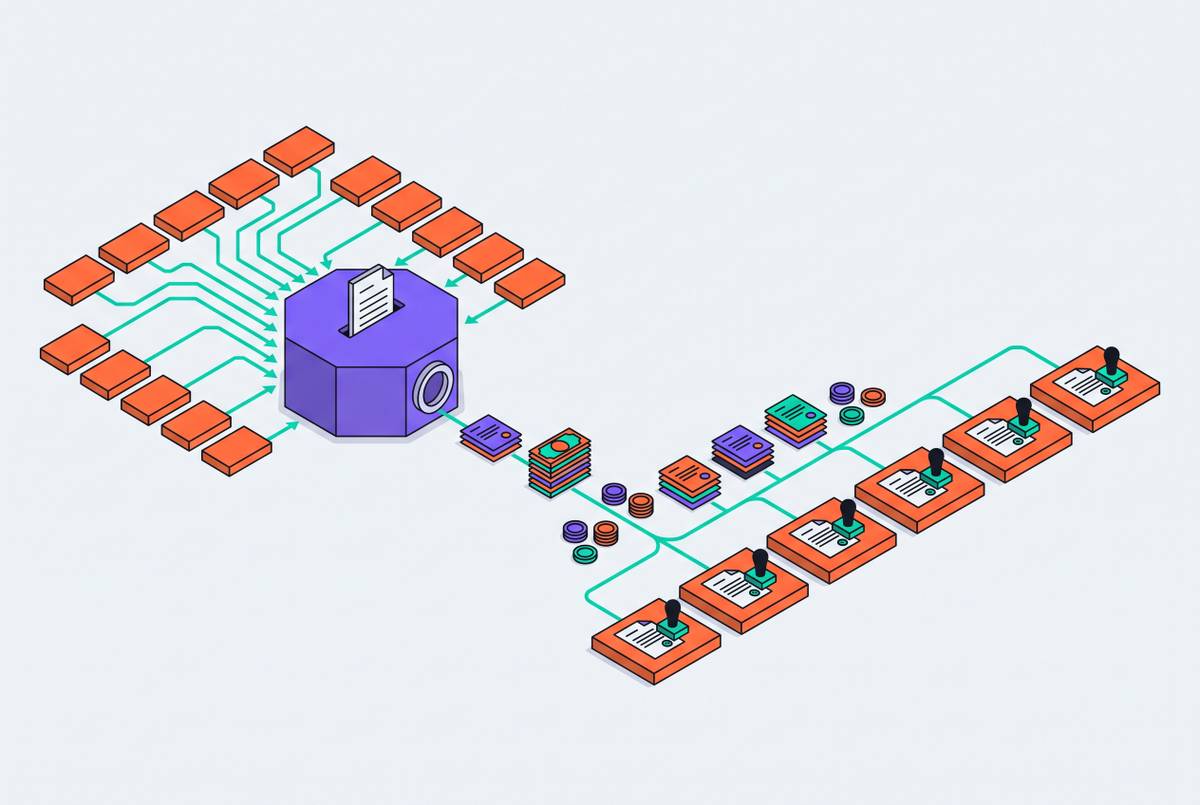
Another option is a gateway that filters the catalog for each tenant, session, or policy without changes to the agent code. This proxy sits between the agent and MCP servers, reducing the schema footprint exposed to the model. It also provides a place to enforce authentication, rate limits, and audit trails. The same boundary that trims the menu can control who is allowed to order.
Security and governance gaps that show up in production MCP deployments
A bare MCP server without authentication, audit trails, or rate limits leaves those responsibilities unresolved. In a LangChain application, builders implement these controls in application code. An MCP gateway moves enforcement to the protocol layer, covering tool calls regardless of which agent or client makes them.
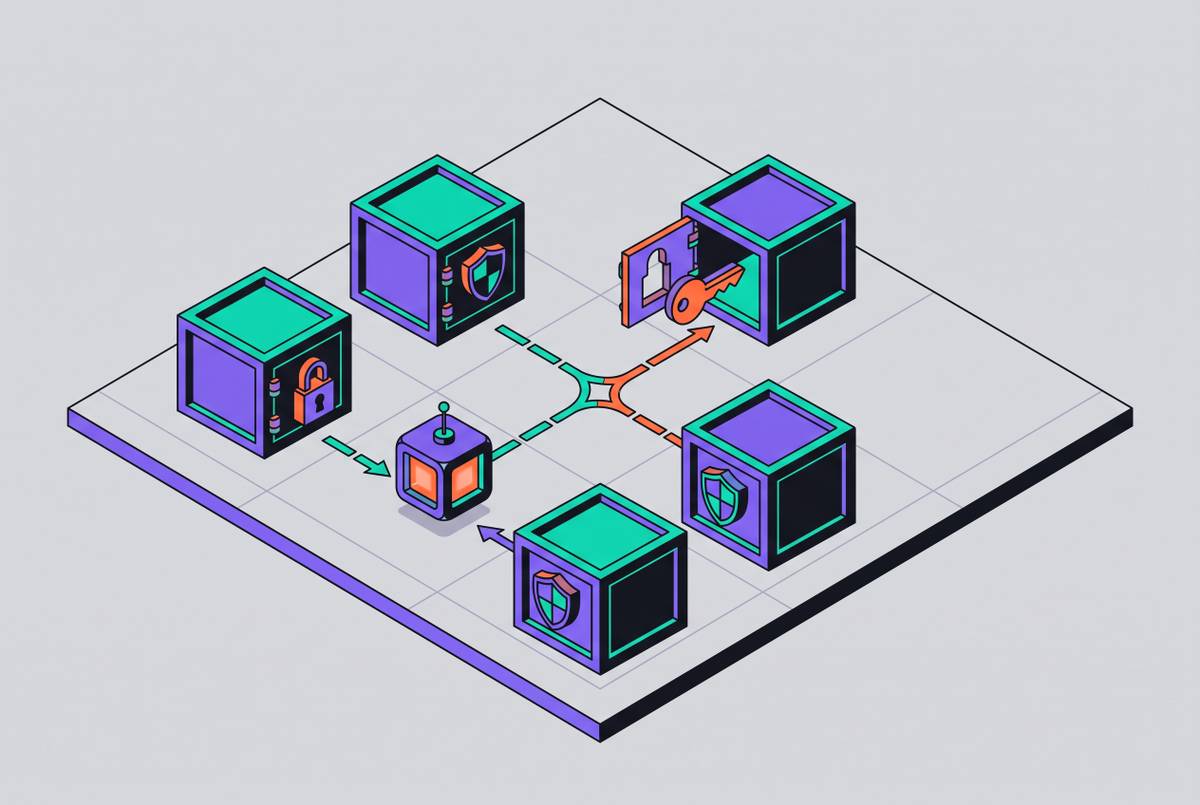
A properly configured gateway can authenticate with JWT, API key, or mTLS while keeping credentials out of the agent. It can apply per-tenant and per-tool authorization through OPA-style policy evaluation and validate input schemas before requests reach the backend. It can also record each invocation and enforce rate limits per tenant. These are gateway responsibilities that require more than server support for MCP.
With runtime discovery, each tenant can have its own tool catalog, while native application tools need filtering within the application. That makes MCP a useful place to express access boundaries, provided the deployment actually enforces them. Enterprise procurement teams ask about audit trails, tenant isolation, and credential handling during security review. The answer needs to explain where control lives.
Where EU data law intersects with MCP server architecture
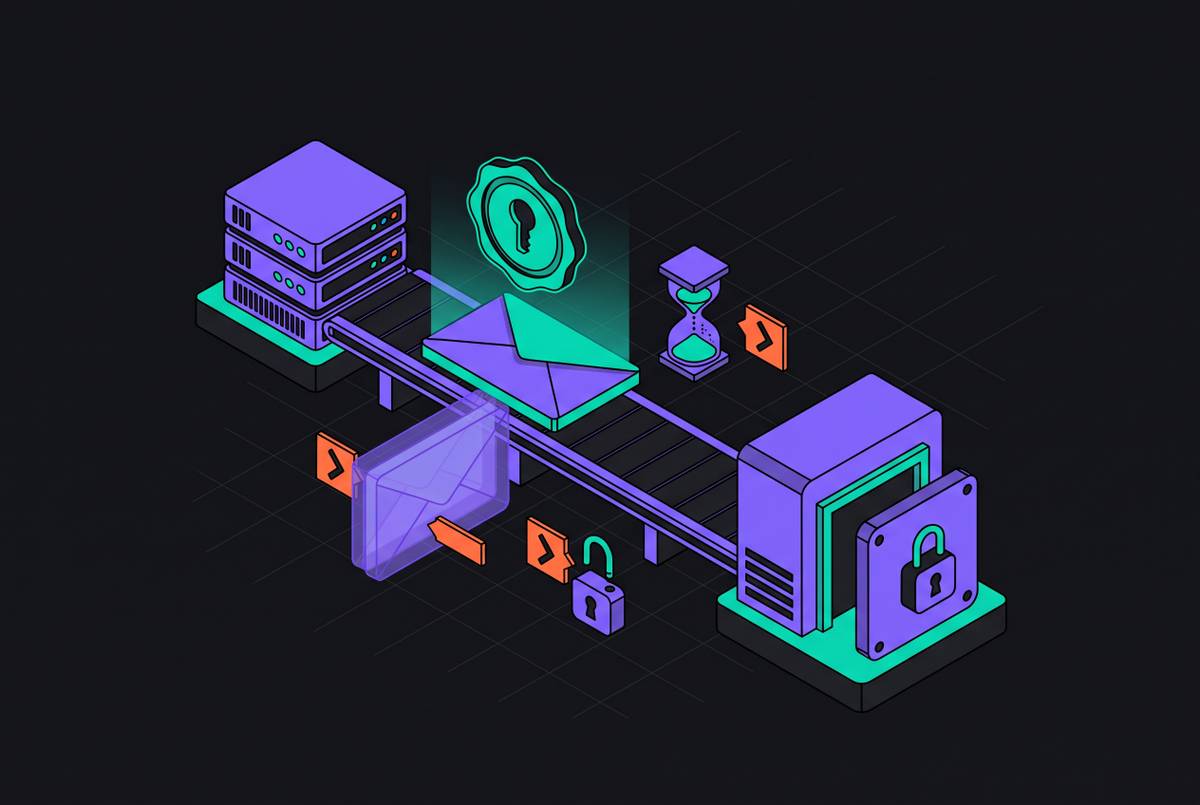
That control boundary also has a location. Routing EU personal data through an MCP server outside the EEA and onward to a US-based LLM raises cross-border transfer requirements under GDPR Chapter V. The integration layer is part of the data flow, even if the product treats it as plumbing. When servers process personal data on behalf of a processor, they bring sub-processor obligations, including a signed Data Processing Agreement and possibly a Transfer Impact Assessment. Putting whole API payloads into the context window also poses a problem for data-minimization.
Four controls belong in the architecture together. They are a signed DPA with the LLM vendor, zero-retention configuration on both the LLM API and integration layer, an EU-hosted integration layer or adequate transfer safeguards, and documentation showing where EU personal data is processed and stored. The US CLOUD Act permits demands for data held by US companies regardless of server location, and provider-managed encryption keys do not resolve that structural issue.
Teams also need to plan for the EU AI Act, whose major obligations take effect through 2025–2028. The Digital Omnibus political agreement of 7 May 2026 pushed back Annex III high-risk obligations from 2 August 2026 to 2 December 2027. That gives teams time to build the duties that apply into their architecture, while they still need to fill in the data map.
How authentication fits into the MCP integration layer for SaaS products
Authentication turns that data map into enforceable tenant boundaries. For HTTP-based servers, MCP prescribes a specific OAuth 2.1 profile, so an existing OAuth implementation needs review for compatibility. Securing the server is only the start. The integration must establish which tenant a request belongs to before the call reaches the backend.
The tenant is usually identified by a subdomain, URL path, or custom domain. A user may belong to multiple tenants, so user-to-tenant mapping also needs a low-latency switching mechanism that does not add a round trip to every invocation. Enterprise customers need more than password and OAuth flows. SAML 2.0 supports single sign-on, while SCIM, defined by IETF RFC 7644, supports user provisioning.
A gateway centralizes authentication and per-tenant policy checks before the tool server across application paths. Its audit trail then records each invocation at that shared boundary. MCP’s OAuth profile and enterprise identity requirements address different parts of the same access path.
What a SaaS backend that handles MCP, billing, and auth from a unified layer looks like
Access control is only one state the backend must keep straight. Each tool invocation also touches subscription entitlements, usage metering, and event tracking, often spread across separate services and webhooks. For usage-based AI products, the backend needs to know the tenant’s plan and limits on every request. A nightly batch job is not much help with a limit crossed this morning.
The entitlement rule is to store plans, limits, and feature flags in the product’s own database, let the billing provider bill, and check tenant entitlement on every request. That requires the application database and billing system to stay synchronized. Adding MCP servers creates more places to implement authentication, isolation, and metering unless those concerns share a backend layer.
Tiun. combines authentication, payments, a customer database, and AI analytics in one system. Its integrated architecture keeps subscription state, tenant entitlements, and event tracking synchronized without custom webhook logic between those services. An agent invoking backend tools through MCP can therefore check entitlements, record usage events, and update billing within the same layer.
Usage-based billing is a first-class feature, and its Merchant of Record role covers global tax compliance and chargebacks. It is hosted in Europe and designed for GDPR compliance, which addresses where the integration layer is hosted while leaving the rest of the data-flow review to be done. MCP integrations and command-line-based skill installation support agent-driven integration work. Compared with assembling separate services, this unified approach suits small teams whose main burden is keeping business state coherent across tools.
A decision framework for SaaS builders choosing their integration layer
Start with reasoning complexity. Simple tool calls against a single LLM, without memory across turns, do not need LangChain merely to look complete. If an existing client supplies orchestration, MCP can be sufficient. Branching workflows, retrieval, and stateful reasoning give LangChain a clear job.
Next, ask which clients need the tools. Tools confined to one custom application are simpler to ship as native LangChain tools. Tools shared across MCP-compatible clients justify MCP servers, with langchain-mcp-adapters connecting them to custom orchestration when needed. At the same time, account for how customer, billing, and product-usage data reach the agent, since fragmented sources may require adapters regardless of the tool protocol.
Finally, match governance to the deployment. A simple consumer product may not need a full policy gateway, but that is not permission to ship an unauthenticated server. EU personal data, enterprise buyers, and tenant-specific permissions call for explicit transfer safeguards, gateway-enforced access, policies, and invocation audits. Adding every layer speculatively burdens a small product with requirements it may not have.
The more dangerous mistake is under-engineering an enterprise product that already has those obligations. A B2B SaaS backend reaching European buyers without the necessary DPA, hosting safeguards, and gateway-level authentication has a compliance liability. Choose the smallest architecture that meets the real requirements, but do not confuse missing controls with simplicity.