GDPR Data Deletion Requirements for SaaS Customer Records
Regulators are cracking down on incomplete data deletion across systems beyond the main database.
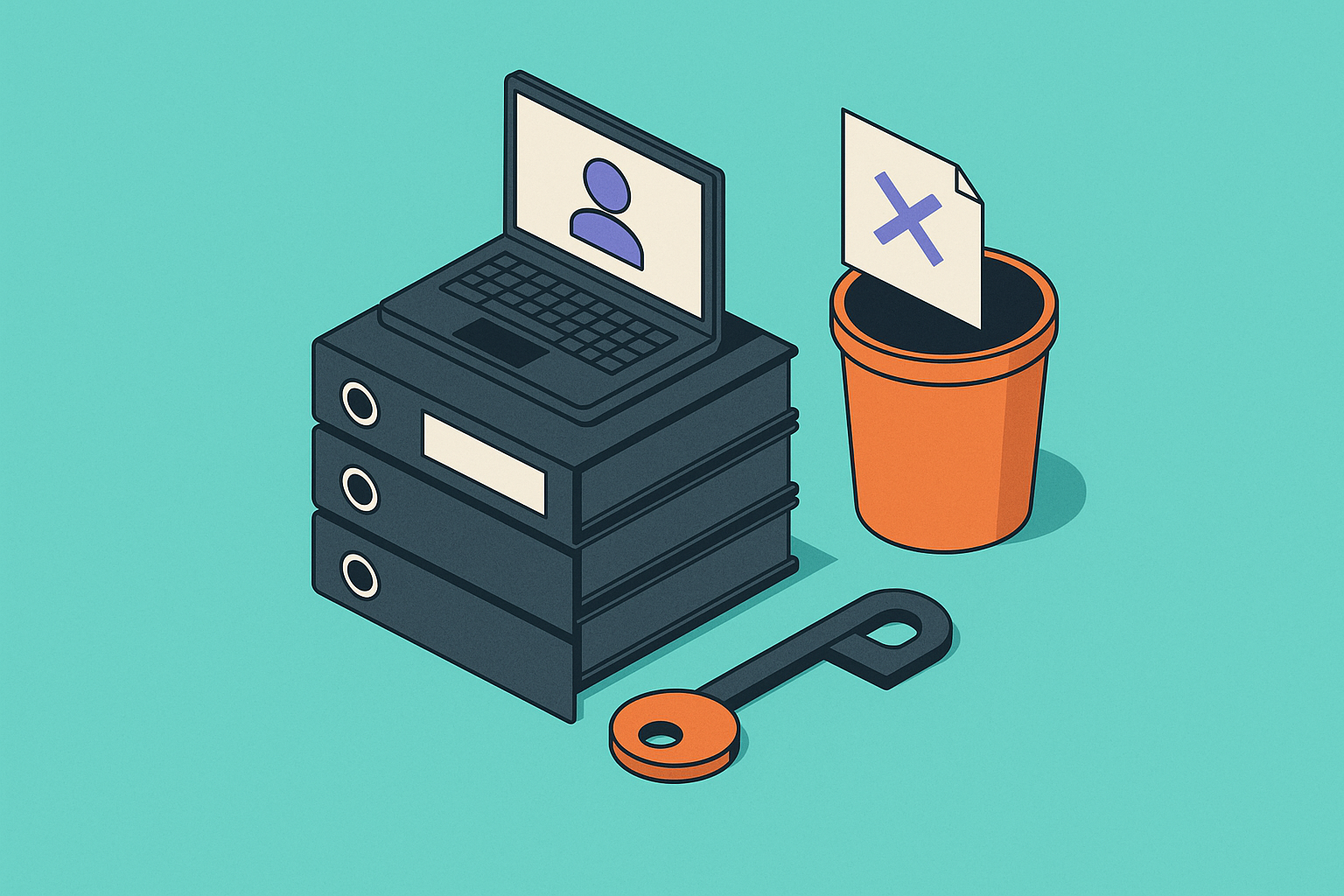
GDPR's Article 17 gives EU residents the legal right to demand their data gets deleted, full stop. Most SaaS teams hear that and think "delete the row, done," but that's the easy 20% of the job. Personal data scatters across logs, backups, analytics tools, email providers, and third-party enrichment services the moment a user signs up, and the main database is just one node in a much bigger graph. This applies to any company with even one EU user, no matter where that company is incorporated or hosted. Below is a map of every layer real deletion touches, so you can tell the difference between actual compliance and the version that just looks good in a slide deck.
How actively regulators are enforcing the right to erasure right now
In February 2026, the European Data Protection Board put out its Coordinated Enforcement Framework report, and Article 17 was the specific target. Thirty-two supervisory authorities took part. They sent questionnaires to 764 controllers, everything from two-person startups to companies you'd recognize by name.
Nine data protection authorities didn't stop at asking questions. They opened formal investigations. Another 23 ran fact-finding exercises that now feed directly into how they plan supervision through 2026. The EDPB's overall grade for compliance: "average." If you're one of the 764, average is not a grade you want to be sitting on right now.
The complaint numbers explain why regulators bothered. The Netherlands logged 580 erasure complaints in 2024 alone, nearly a fifth of everything its DPA received that year. Ireland has taken in more than 3,000 erasure complaints since GDPR started. Spain's tally sits above 7,000. This isn't some obscure corner of the law nobody invokes; it's a routine, everyday friction point between companies and the people whose data they hold.
Zoom out and the fines pile up fast: over 2,245 fines totaling close to €5.65 billion across the seven years since GDPR took effect, with more than €1.6 billion of that landing in 2024 alone. Kill the misconception now: this is not a big-company problem. The assumption that regulators only go after large companies is a misconception; penalties have landed across organizations of varying sizes. Maximum exposure sits at €20 million or 4% of global annual revenue, whichever number stings more. The CEF findings are feeding directly into how DPAs plan sector inspections through 2026. Consider this the calm before the fine.
What counts as personal data inside a typical SaaS customer record
GDPR defines personal data about as broadly as a law can: anything that could identify a living person, directly or by connecting the dots. Most teams think their exposure starts and stops with name, email, billing address. It doesn't, not even close.
Pull apart a real SaaS customer record and you'll find layers most engineers never think to label:
- Core account data: name, email, hashed password, subscription tier, billing details
- Behavioral data: session logs, feature usage events, click streams, timestamps
- Derived data: cohort labels, churn-risk scores, usage-based billing meters
- Infrastructure data: IP addresses, device fingerprints, user-agent strings
- Support and marketing data: helpdesk tickets, chat transcripts, email open events, campaign tags, whatever a third-party enrichment tool bolted on last quarter
IP addresses deserve a callout on their own. Courts and DPAs have treated them as personal data for years, and yet they sit in server logs nobody bothers to label as "customer records." Behavioral logs tell the same story in a different costume: they look like harmless telemetry until you notice they're tagged with a user ID or IP, at which point they're squarely inside GDPR's scope, whether your engineering team meant for that or not.
You cannot build a deletion pipeline without mapping where the data actually lives first: what system, what identifier, what format. Skip the map, and your deletion process is broken before you've written a single line of code.
The seven failure patterns the EDPB found, and what they actually look like
The EDPB's report didn't turn up rare edge cases. It found the same handful of gaps, repeating across hundreds of organizations like a bad chorus.
Seventeen DPAs flagged controllers with no documented erasure process at all: no owner, no timeline, no workflow. In a small SaaS shop, this usually means deletion requests land in a support inbox and get handled by whoever's free that afternoon, with zero record of what got deleted or when.
Backup deletion was a major recurring technical failure, flagged by roughly half of all participating DPAs. The pattern: a team deletes the live database row, calls the job done, while encrypted snapshots holding that same record sit untouched in cloud storage for weeks or months afterward.
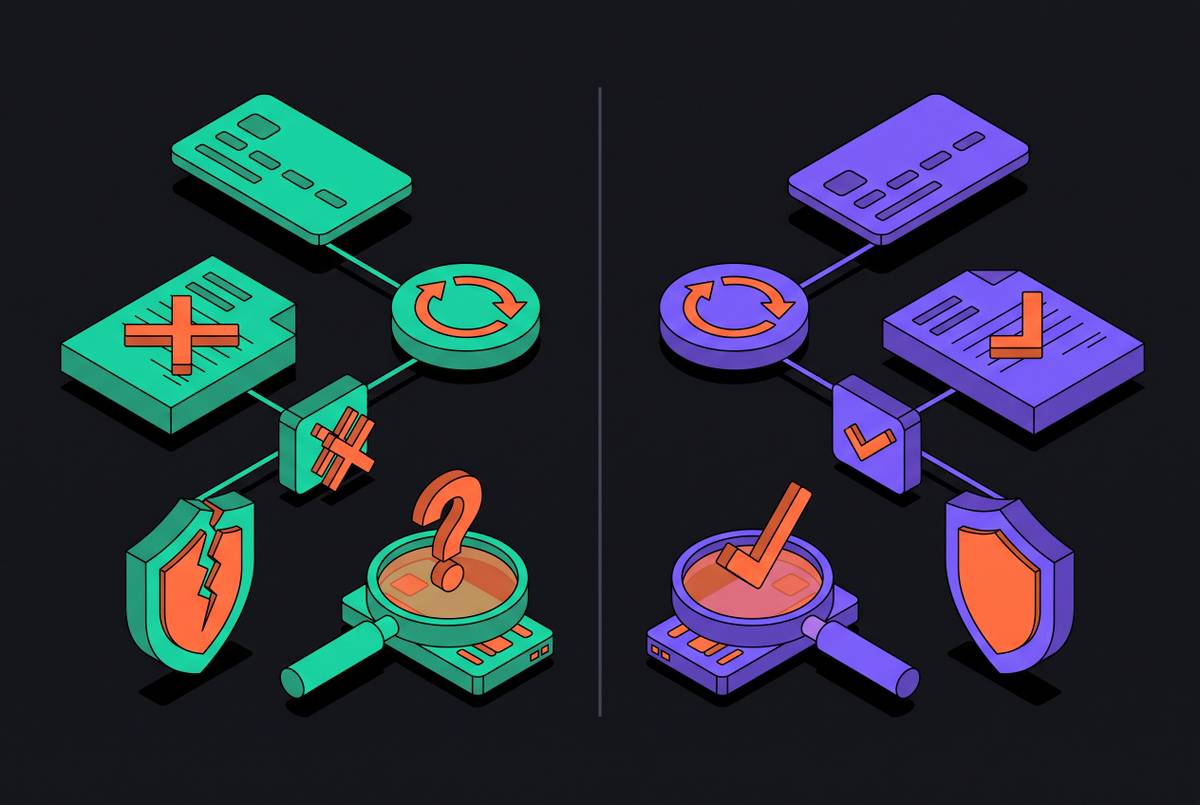
Beyond that, DPAs caught controllers failing to confirm deletion back to the requester, missing the 30-day window, or sending confirmations so vague they don't actually explain what happened. They also caught companies calling something "anonymised" when it was really just pseudonymised (reversible masking wearing an anonymisation costume, more on that below). Add incomplete sub-processor coverage, where the primary database gets scrubbed but downstream tools keep the data intact; no technical proof or audit trail that deletion happened; and disaster recovery procedures that quietly restore data everyone thought was gone. Seven patterns. One thread runs through all of them: deletion that looks finished on the surface and isn't finished underneath.
Anonymisation versus pseudonymisation, and why the difference has teeth
A lot of SaaS teams treat anonymisation as a shortcut around deletion. Instead of removing the data, scramble it, and call the job done. The legal theory does hold up: data that's genuinely anonymised falls outside GDPR entirely, because if nobody can be identified from it, it stops being personal data by definition.
Here's where it falls apart in practice. The EDPB found that most of what controllers called anonymisation was really pseudonymisation: identifying fields get swapped for tokens or hashes, but the mapping table that reverses the whole thing still sits somewhere on a server. That's a security measure, not a substitute for deletion, and it does not satisfy an erasure request.
Real anonymisation demands irreversibility. It has to be technically impossible to re-identify the person, even if someone cross-references it against other datasets floating around out there. And the ground here is still shifting: the EDPB is drafting new anonymisation guidance following the CJEU's September 2025 ruling in Case C-413/23P (EDPS v. SRB), so treat anything you build today around anonymisation as provisional, not settled law.
Practically speaking: if your "delete" function hashes a field but keeps the mapping table intact, a DPA will call that pseudonymisation and flag it as non-compliant, whatever your internal documentation happens to call it. Anonymisation earns its keep in aggregate analytics and de-identified usage metrics, places where no individual output ever needs to trace back to a person. That's the job it was built for. Deletion is a different job entirely.
The backup deletion problem, and the two approaches that actually survive an audit
Backups are the recurring failure point, cited by roughly half the DPAs in the 2026 review, and the reason is almost baked into the architecture: backups exist to be immutable, and immutability is directly at war with editing one person's record out of them.
Two common shortcuts show up again and again, and both fail the EDPB's bar flat. Some teams have no backup policy whatsoever; they fulfill the request in the live system and never touch backups at all. Others lean on automatic rotation cycles, betting that eventually the old backup ages out and the problem solves itself quietly, with no documentation, no communication to the user, and no way to actually verify it happened.
The EDPB called out one approach worth copying: a controller that, once a user hit their retention end date, automatically pulled every piece of personal data tied to that person out of every system, moved it into an access-restricted holding area, and permanently deleted it a month later. Documented. Auditable. Bounded by a clock anyone could check.
There's a database pattern that holds up well under audit too. Keep a separate table of deleted record IDs, and when a backup gets restored for any reason, replay that erasure log against it immediately, so the restore doesn't quietly bring back someone who asked to be forgotten. Pair that with a written maximum backup retention window (30 days is common) and real recovery testing that confirms your disaster recovery process doesn't undo deletions you already fulfilled. Some teams look at encrypting backups and destroying the keys instead; that can work, but check with your DPA before you bet your compliance posture on it.
Building a deletion pipeline that covers the whole footprint, not just the database
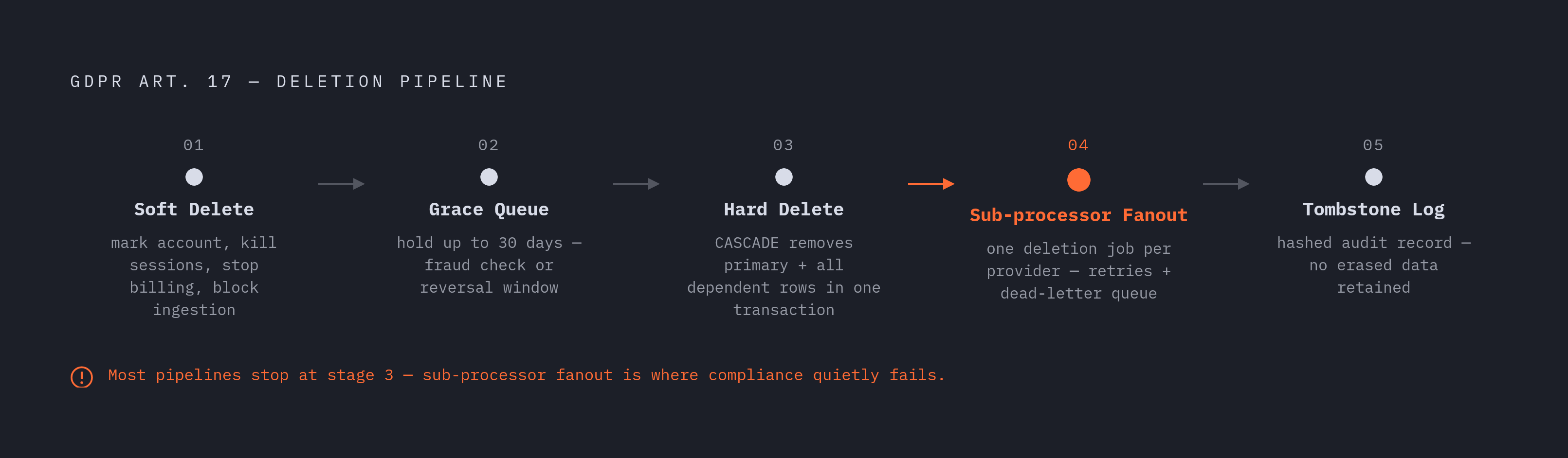
Nothing here works without a personal data registry first: a maintained record of every system holding user data, keyed to a user identifier. Skip this step, and no pipeline you build afterward can be complete, because you don't know what you're missing in the first place. For a SaaS company running five to ten separate data stores, a 2026 engineering guide put the build time at four to eight weeks of senior engineering work, done right.
From there, a five-stage pipeline tends to survive audit:
- Soft delete on request: mark the account deleted, kill active sessions, stop billing meters, block new data from being ingested
- Grace queue, up to 30 days: hold off on the hard delete in case the request turns out fraudulent or the user changes their mind
- Hard delete with CASCADE: once the grace period ends, remove the primary row and every dependent row in one transactional operation, no orphaned leftovers sitting around
- Sub-processor fanout: a queue that fires one deletion job per downstream provider, with retries and dead-letter handling built in, since this is exactly where most pipelines quietly stop short
- Tombstone audit log: a hashed record of the request, timestamp, and each provider's confirmation, proving deletion happened without retaining the data that got erased
Verification can't be assumed; it has to be checked by hand, or at least by script. Search for the erased data across every relevant system and confirm nothing surfaces. Confirm backup and archive systems actually reflect the policy on paper. Test recovery procedures directly, to make sure they don't bring records back from the dead like some kind of database zombie movie. And watch the clock: fulfillment, not just acknowledgment, needs to land within 30 days, sub-processor fanout included. Confirming completion to the user is its own legal obligation, not a courtesy email, so the pipeline should fire that notice the moment every stage closes out.
Where sub-processor sprawl turns deletion from an engineering job into a company-wide one
A SaaS product's data footprint runs through every tool that touches user data: error monitoring, product analytics, email delivery, customer support software, enrichment services, data warehouses. Each one you bolt on creates a data processing agreement obligation, and on a deletion request, one more fanout target to hit.
The math compounds fast, and quietly. Dev teams add integrations constantly, and every new one touching personal data needs to be documented, its agreement kept current, its deletion pathway checked and re-checked. Manual tracking breaks down fast on a small team; a tool someone bolted on during a random Tuesday sprint can be completely forgotten by the time a deletion request shows up three months later.
Article 17 doesn't let controllers off the hook here either. When you erase someone's data, you're required to instruct every processor holding a copy to do the same, and you stay on the hook if they don't follow through. That means Stage 4 of the pipeline above, the sub-processor fanout, only works if your processor list is actually current. A stale list means incomplete deletion, no matter how clean your internal database looks on the surface.
The architectural lesson underneath all of this: every point tool bolted onto your backend is a deletion surface you now maintain forever. A backend that consolidates authentication, analytics, and customer data into fewer systems shrinks that surface directly: fewer fanout targets, fewer agreements to track, fewer places for the pipeline to quietly snap. Some platforms are built around this exact idea, folding what would otherwise be a pile of separate point tools into one system with a shared data model, so there are fewer places for a user's data to hide when deletion day actually comes.
What AI pipelines add to the mess, and how to actually handle them
GDPR doesn't carve out an exception for machine learning. Any AI system touching personal data answers to the same rules as the rest of your stack, no matter how the marketing copy tries to frame it.
The trouble is where the data ends up piling up. Training datasets absorb user behavior or content used to fine-tune a model. Vector embeddings turn personal content into numerical representations stored in a vector database, and deleting one person's contribution from that space is genuinely hard once it's baked into the math. Inference logs capture queries and outputs that often contain personal data and stick around for debugging or quality checks long after anyone meant to keep them. Prompt caches add one more layer, since data sent to an LLM API can get cached by the provider itself, sitting entirely outside your control.
GDPR doesn't allow storing personal data with no defined purpose attached, and AI pipelines accumulate data exactly this way by default: logs kept "just in case," embeddings nobody revisits, caches nobody ever audits. Treating an AI pipeline as exempt from the same deletion discipline as the rest of the stack isn't a small gap in your compliance program. It's a blind spot, and it's the one most teams building AI features right now haven't even mapped yet.