What compliance regulations by industry mean for SaaS builders shipping globally
Compliance obligations for global SaaS depend on users, data, and industry, not universal rules.

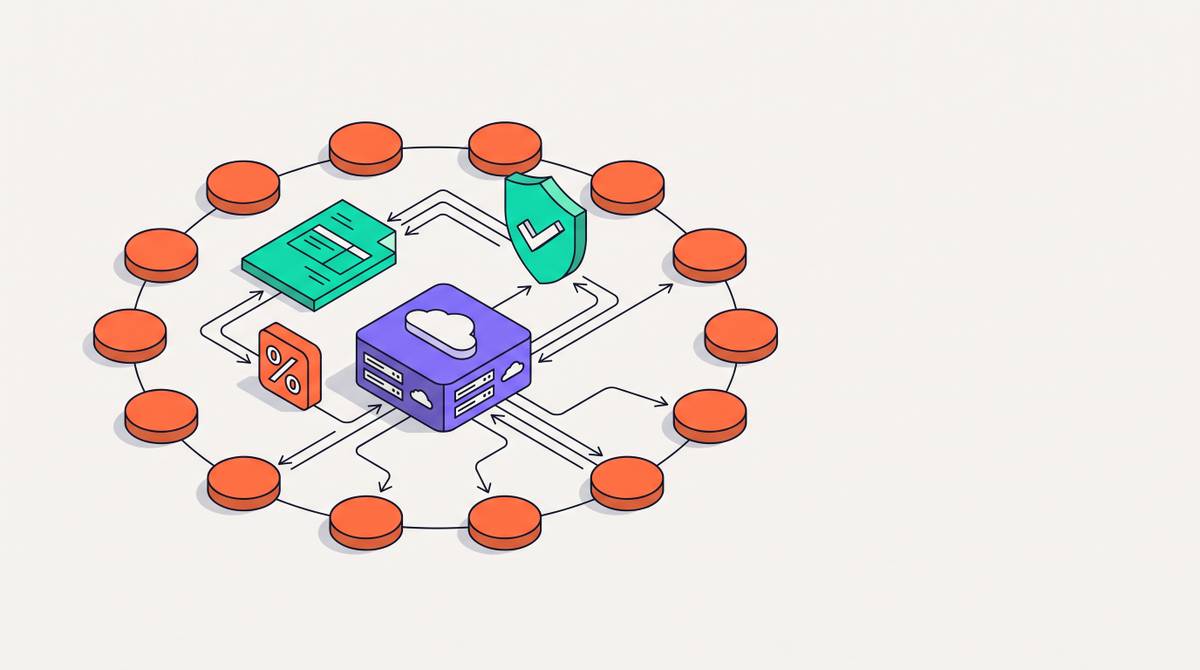
Global SaaS compliance is a map of triggers. The obligations depend on where your users are, what data your product handles, and what it does with money or AI. Knowing those triggers before they expand lets builders spend on the controls they need without collecting certifications like expensive fridge magnets.
Why compliance for SaaS is jurisdictional and industry-triggered, not universal
The deal stalls when a healthcare customer asks for a Business Associate Agreement that nobody planned for. A new customer can change the legal obligations attached to an existing feature without changing its code. A messaging tool has different legal duties when protected health information moves through it.
A SaaS business can be outside HIPAA’s scope, subject to GDPR because it processes EU personal data, and within PCI DSS scope only if it handles payment card data. Those positions can coexist. A useful expansion plan therefore follows users, data flows, and financial activities rather than asking whether the company is simply “compliant.”
The cross-cutting foundation: frameworks every global SaaS builder encounters regardless of industry
Enterprise buyers ask for a shared set of security controls before rules for a given industry come into play. SOC 2 Type 2 evaluates whether controls operated effectively over a defined period and is a common U.S. enterprise buying requirement. ISO 27001 provides a different signal for international expansion through certification by an accredited body after a two-stage audit. North American customers often ask for SOC 2 reports, while customers in other countries may ask for ISO 27001, so some builders seek both.
Much of the underlying work can serve several frameworks. Roughly three-quarters of the controls required by SOC 2, ISO 27001, and HIPAA overlap, making the first framework the most expensive foundation to establish. Encryption using AES-256, TLS 1.3, vendor inventories, incident response runbooks, and automated evidence collection all contribute to that shared layer. Collecting evidence helps teams track controls even when an audit is not due. Automated preparation takes days rather than the weeks spent reconstructing records manually.
FedRAMP belongs on a separate investment track. It applies to cloud services sold to U.S. federal agencies and takes years and a great deal of money. Most builders can defer it unless government is an explicit target market. Enterprise ambitions alone do not justify taking on that commitment.
EU user data: GDPR as the unavoidable first trigger for any global expansion
GDPR demonstrates how a jurisdiction can reach beyond a company’s incorporation address. Processing EU or UK residents’ personal data brings privacy obligations into view regardless of where the SaaS business is based. Builders need documented processing activities, lawful grounds for processing, processes for data subject requests, processor contracts, and notification procedures for qualifying breaches.
The financial exposure reinforces that operational burden. GDPR’s two penalty tiers use fixed maximums or percentages of annual global revenue, with the greater amount applying and more serious violations facing higher limits. The EU Data Act also sets rules for how European customers can leave one cloud or AI service provider for another. Its “30-day exit” mandate requires switching within that window without punitive exit fees or intentional technical friction.
Infrastructure choices add another layer of uncertainty. As of January 2026, the EU-US Data Privacy Framework had survived its first court challenge but remained under appeal at the CJEU. It remained in force pending review. AWS launched its European Sovereign Cloud on 15 January 2026, with its first region in Brandenburg, Germany, a new parent company, three subsidiary GmbHs, and EU-resident personnel. Its launch catalog was narrower than the full commercial EU catalog, with gaps including CloudFront, GPU instances, and most Bedrock models.
That distinction makes “hosted in Europe” an incomplete answer. European hosting from an EU-headquartered provider with no U.S. parent and genuine GDPR accountability represents a different posture from selecting an EU region on a U.S. cloud. Builders weighing residency need to understand both the location and the provider’s legal structure. The same infrastructure decision becomes more demanding when the data is also regulated by industry.
Healthcare SaaS: what HIPAA actually requires when PHI touches your product
HIPAA applies when a product creates, receives, maintains, or transmits protected health information as a covered entity or business associate. The feature’s name provides no exemption. A scheduling tool, messaging platform, or analytics layer used to handle PHI can bring a SaaS vendor into scope, even if it does not describe itself as a healthcare company. A Business Associate Agreement, or BAA, is required for that business associate relationship.
The obligations span the HIPAA Privacy Rule, Security Rule, and Breach Notification requirements. They govern more than the contract signed during procurement. Civil penalties can reach millions of dollars per violation category per year, so a data flow that goes unnoticed can cost far more than a delayed sale. Readiness therefore needs to be designed into products where PHI may enter, including through incidental customer use.
If a general-purpose AI tool receives PHI, it needs a BAA just like another vendor handling that information. An employee-facing interface does not make the data unregulated. The lesson for builders is to follow PHI through the whole toolchain, rather than treating the customer-facing application as the entire compliance perimeter.
Fintech and payments: PCI DSS, state-level money transmission rules, and where the obligations diverge
Accepting payment for software is not the same as operating a financial service. PCI DSS applies when a SaaS company stores, processes, or transmits payment card data. It is a card-network mandate. Money transmission, banking, lending, and sometimes securities rules instead depend on what the product does financially. Most SaaS builders sit in the first category, while products that move, hold, or lend money face a more complex set of obligations.
For card handling, PCI DSS 4.0.1 is the version builders should work toward. Failing to meet the rules can lead to card-network fines, higher transaction fees, or losing the ability to process payments. The cleanest scope reduction is architectural. Routing card data through a compliant processor keeps raw card details out of the application and materially narrows what the builder must secure and assess. The builder still has duties within that smaller scope.
Tax compliance runs on a separate track again. VAT on digital services applies across well over a hundred countries, while economic nexus rules apply across the vast majority of U.S. states. A Merchant of Record, or MoR, addresses this through legal reassignment, selling on the builder’s behalf and taking on tax remittance, fraud prevention, chargebacks, and legal liability for those obligations. That can spare a SaaS business a parallel tax operations function. It does not convert a product that moves or lends money into an ordinary software subscription.
U.S. state privacy laws differ for builders targeting the American market
The U.S. has no single framework for privacy rules like GDPR’s EU-wide framework. Instead, builders must keep up with more state laws whose rules overlap but also differ. The California Consumer Privacy Act, or CCPA, gives residents rights including knowing what information is collected, requesting deletion, and opting out of data sales. Businesses must support those rights with clear disclosures and processes for consumer requests.
California’s map does not cover every state. Activation thresholds differ by revenue, the number of residents whose data is processed, or both, while rights and enforcement timelines also vary. The practical response is a high-watermark strategy. Builders can use GDPR and CCPA as a common baseline, then add state-specific differences rather than rebuilding privacy processes from scratch. Continuous monitoring remains necessary because state requirements can differ from that baseline.
AI features and the EU AI Act: what SaaS builders deploying AI into their products owe
Most SaaS builders embedding features through LLM APIs sit in the EU AI Act’s deployer category. That generally means a narrower set of obligations. Providers face the heavier requirements, including risk management documentation, conformity assessments, EU database registration, and CE marking for high-risk systems. The Act applies in stages, so builders must assess their use case and implementation date rather than assuming every requirement starts together.
Chatbot disclosure is the most visible product-level obligation. Where it applies, users must be told they are interacting with AI before or at the point of interaction through a visible UI element. The terms of service are not the place for this notice.
AI also inherits obligations from the information it receives. Internal tools handling personal data need GDPR data processing agreements where applicable, while tools handling PHI need the healthcare protections already described. Enterprise data processing agreements also often require businesses to disclose their subprocessors. Builders must assess whether sensitive information reaches third-party models and how vendors handle prompts and outputs, because the model boundary is also a vendor boundary.
ISO 42001, published in December 2023, provides a management system framework for AI governance and is increasingly referenced in enterprise vendor assessments. It complements security and privacy programs without replacing applicable law. One feature can therefore sit under several frameworks. EU personal data entering a model can engage GDPR, PHI in its context can engage HIPAA, and the AI functionality itself can engage the Act.
Authentication as a compliance dependency, not a product feature
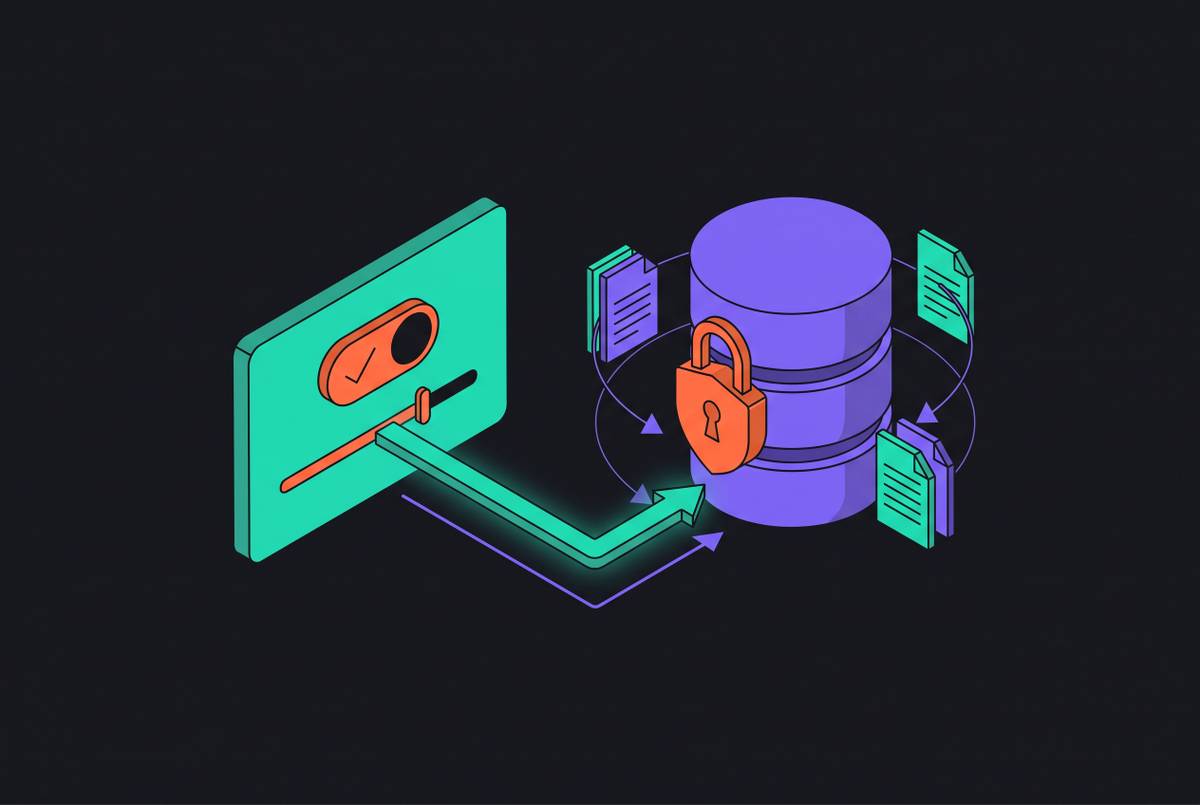
Access control and authentication are commonly tested across GDPR, HIPAA, SOC 2, and PCI DSS. The login system is therefore part of the compliance infrastructure. Centralized authentication, access logging, policy-based role management, and automated provisioning support requirements across several frameworks. SSO earns its place by providing those controls as well as making sign-in smoother.
SCIM 2.0 deprovisioning lets a SaaS product remove access automatically when an employee leaves a customer’s organization. Removing access by hand leaves an access-control gap that auditors flag.
Maintaining JWT authentication includes token rotation, refresh token handling, session invalidation, MFA, SSO integration, password policies, and breach detection. It is a continuing engineering commitment. For most builders, an authentication service costs less than maintaining that machinery independently. An integrated backend can also bring authentication, audit logging, SSO, and access controls together without requiring a separate system for each.
How to sequence compliance investment as you expand into new markets and industries
The investment order should follow actual users and intended next markets. For enterprise ambitions, SOC 2 Type 2 is the common starting point, with a first audit taking six to nine months and establishing controls that later frameworks can reuse. GDPR belongs next in the plan when EU expansion is near. If EU users are already present, however, their obligations cannot wait behind an audit project. Sequencing investment is not permission to postpone an active legal duty.
Industry layers follow the same logic. HIPAA readiness belongs with entry into healthcare data flows, PCI DSS with payment card handling, and applicable AI duties with AI features. Maintaining unused certifications has a real cost. The goal is to prepare for the next genuine trigger.
Frequent releases also make one-time audit preparation insufficient. Automated evidence collection and centralized logging support continuous monitoring as the product changes. Infrastructure consolidation can make that work less fragmented. A unified backend for authentication, payments, customer data, and analytics reduces the separate tools whose evidence, contracts, and subprocessors must be tracked, while an MoR and European data hosting can address distinct payment and jurisdictional needs.
Cohesion gives the team fewer compliance surfaces to manage as each new market or industry adds its own requirements. That is the useful expansion strategy, building shared controls once and extending them where the next real trigger demands it.