PCI DSS Compliance Scope for SaaS Subscription Platforms
Reducing your cardholder data environment shrinks compliance costs and audit burden dramatically.

PCI DSS compliance for a SaaS platform comes down to one question: how much of your stack counts as the cardholder data environment. Answer that honestly, shrink it on purpose, and the rest of compliance gets a lot cheaper and a lot less scary. This piece walks through what's actually in scope, the moves that pull infrastructure out of it, and what's left to manage once you're done.
Start with the version 4.0.1 is now the only version that exists on paper. PCI DSS 3.2.1 retired March 31, 2024. Version 4.0 followed it out the door on December 31, 2024. If a vendor, a consultant, or an old blog post is still citing 3.2.1 requirements, that ship has sailed and it's not coming back.
The standard applies to any entity that stores, processes, or transmits cardholder data, full stop. Cloud hosting doesn't exempt you. "We're just a SaaS platform" doesn't exempt you. If a card number touches your infrastructure at any point, in any form, PCI DSS has an opinion about it.
Skip compliance and the penalties aren't abstract. Non-compliance fines can run $5,000 to $10,000 a month, and penalties for SaaS companies can reach up to $100,000 a month. Get bad enough, and you can land on the MATCH List or the Terminated Merchant File, which is the payments industry's way of telling every future processor not to touch you. A wide CDE makes all of this worse: more systems in scope means more to secure, more to audit, and more that can go wrong when a breach hits.
Here's the misconception that trips up almost every early-stage founder: using a third-party processor doesn't make PCI someone else's problem. The shared responsibility model still puts the platform on the hook for how card data moves through its own stack before it ever reaches the processor. So the real question was never whether PCI applies. It's how much of the platform it applies to, and that's a scoping decision you actually control.
What the Cardholder Data Environment actually includes for a cloud-native SaaS product
The CDE is every system that stores, processes, or transmits cardholder data, plus anything that could affect the security of those systems. That second clause is where scope quietly balloons.
For a typical SaaS product, that routinely pulls in the application database and APIs, the admin console, the CI/CD pipeline that deploys to payment services, analytics tools that might be ingesting card data without anyone noticing, and staging or dev environments that mirror production data flows a little too faithfully.
Multi-tenant architecture makes this worse in a way that's specific to SaaS. Cardholder data doesn't sit in one place, it propagates through a dozen microservices and API endpoints, and each one it touches drags more of the system into scope. Segmentation gets harder the more services you have talking to each other.
Then there's the checkout-page trap, and this one catches almost everyone at least once. If a SaaS platform builds its own payment form, even if the card data flows straight to the processor and never touches the platform's servers, that page is still in scope for client-side security requirements. The card number skipping your backend doesn't mean the page assembling the form gets a pass. It's a bit like assuming you're off the hook for a party because the guests brought their own drinks. You still own the house.
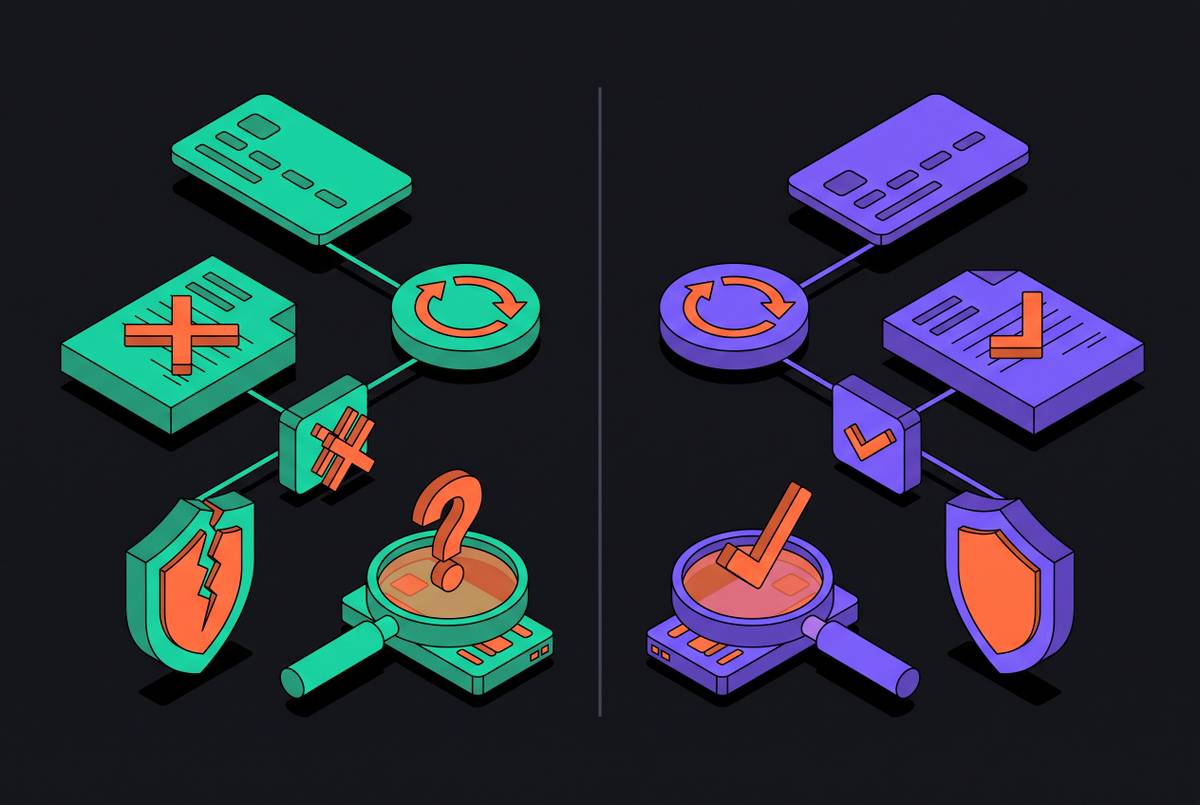
Requirement 12.5.2 in version 4.0.1 makes this a documentation problem now, not just an engineering one. Scope determination has to be documented annually, including a review of whatever segmentation controls are in use (with the actual effectiveness testing of those controls handled separately under Requirement 11.4.5). Assuming your scope is small doesn't count anymore. Proving it does.
The three architectural moves that shrink the CDE before compliance work begins
Worth putting a number on why this matters: the shortest Self-Assessment Questionnaire covers only a handful of controls. The full SAQ D runs to many hundreds of line items. That gap is the entire return on investment for taking scope reduction seriously before you write a line of compliance documentation.
Move one: hosted payment pages and iFrames. SAQ A, the lightest questionnaire available, requires payment functions to be fully outsourced through a redirect, an iFrame, or a hosted payment page, with cardholder data never touching the platform's own systems. One wrinkle: iFrame setups carry an extra eligibility check confirming the site isn't vulnerable to script-based attacks, a criterion that applies specifically to iframe merchants. Still, for any SaaS platform that doesn't need to own the payment UI, this is the lightest compliance posture on the table.
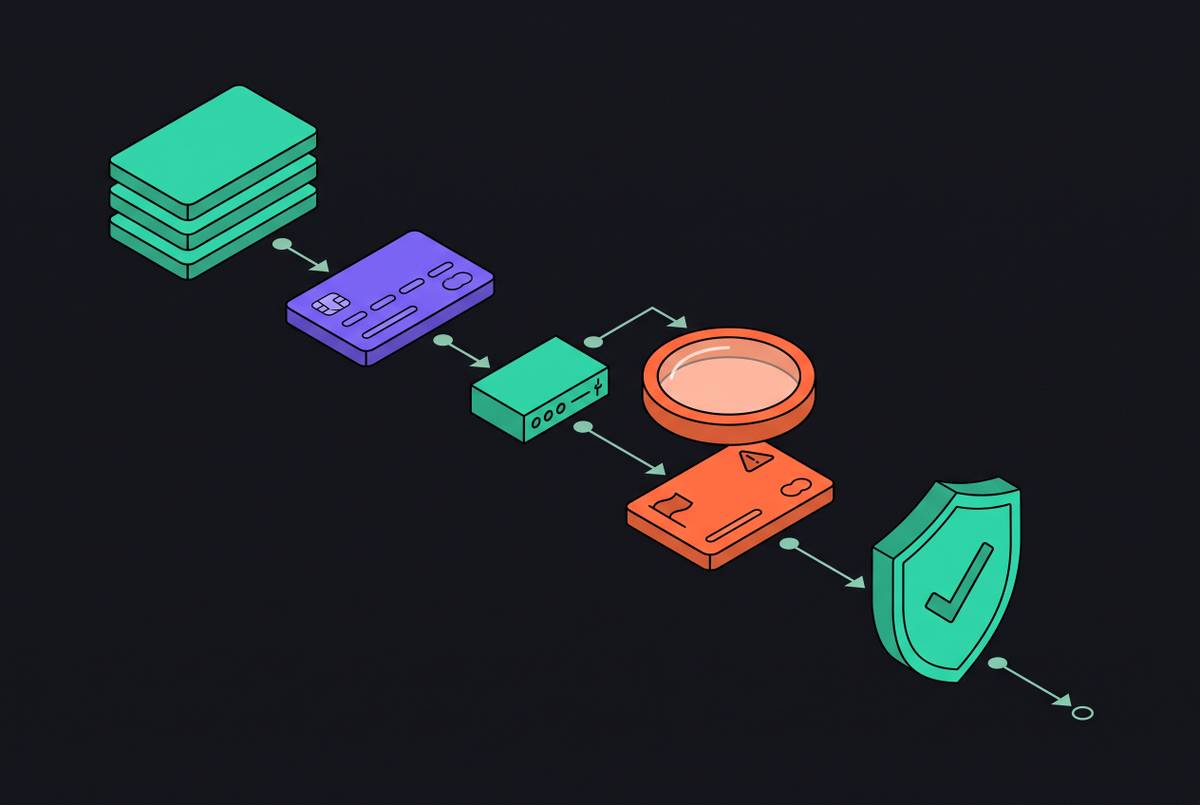
Move two: tokenization. Card data goes from the customer's browser straight to a PCI-compliant payment provider, and the provider hands back a token. That token gets stored and reused for recurring billing, and the platform never touches, stores, or even sees the actual card number. For subscription SaaS, where recurring charges run against stored credentials month after month, this matters enormously. Tokenization isn't a nice-to-have security layer bolted on afterward. It's the mechanism that keeps recurring billing out of the CDE entirely.
Move three: network segmentation. Systems separated from the CDE by validated controls, firewall rules with default-deny settings, no direct connectivity paths, can be classified as out of scope. Combine this with hosted pages and tokenization, and a platform's own infrastructure footprint in the CDE can shrink to almost nothing. VLANs, firewalls, and access control lists are the tools that make this real, not theoretical.
Annual PCI audit costs range from $5,000 to $200,000 depending on which PCI level a platform falls into, and a wide CDE pushes that number toward the top of the range every time. Scope reduction pays for itself before the first audit even starts.
What PCI DSS 4.0.1 actually requires from the infrastructure that stays in scope
Even the leanest CDE still has to meet the standard, and version 4.0.1 raised the bar considerably from 3.2.1. Sixty-four new requirements got added between the two versions, and the authentication changes are the ones that'll actually change how development teams work day to day.
Multi-factor authentication is the big one. Under the old standard, MFA was required for administrators accessing the CDE remotely. Under 4.0.1's Requirement 8.4.2, which became fully mandatory March 31, 2025, MFA is required for all access into the CDE, period, regardless of role or network location. Requirement 8.4.1 still covers non-console admin access specifically, and 8.4.3 covers remote access from outside the network that could touch the CDE. There's no more "just the admins" carve-out.
Password rules tightened too. Requirement 8.3.6 sets a 12-character minimum with both letters and numbers when a password serves as one authentication factor. Service providers whose customers rely on passwords alone to access cardholder data have to enforce 90-day rotation, unless they're dynamically analyzing account risk in real time to justify skipping it.
Checkout pages picked up new scrutiny too. Since March 31, 2025, the standard imposes tighter controls on checkout-page scripts, CDNs, and tags, because that's exactly where web-skimming attacks usually start. Hosted payment fields reduce scope, but they don't erase the obligation to secure the page around them. If the surrounding page can affect payment security, it's still in scope, hosted fields or not.
None of this should feel foreign to teams already building toward Zero Trust. Universal MFA, least-privilege access, dynamic risk checks: that's the Zero Trust playbook, just with PCI's name on it. And vulnerability scanning got more rigorous as well. Internal scans now have to be authenticated, meaning the scanning tool logs in with real privileged credentials rather than poking at the system from outside, which surfaces weaknesses an unauthenticated scan would walk right past.
All of that is what's left to manage once scope reduction has done its work. The most aggressive option available doesn't just shrink that remainder. It hands the whole thing to someone else.
How the Merchant of Record model transfers PCI obligation out of the platform entirely
Under a Merchant of Record setup, the MOR is the entity in PCI scope, not the platform. The application never touches a card number at any point, and the platform's PCI obligation for payment processing drops to close to nothing.
The platform's CRM and internal systems still get populated with customer and transaction records, just without full card numbers anywhere in them. Customers get shielded from the compliance weight of that data because it never reaches them in the first place.
What the MOR takes on is substantial. PCI DSS compliance for the payment infrastructure, obviously, but also chargeback liability, meaning when a cardholder disputes a charge, the MOR is the one fighting it. Card-not-present fraud loss falls on the MOR too, and in SaaS verticals fraud rates commonly run 0.5% to 2%, which adds up fast against meaningful revenue. Sales tax and VAT calculation, collection, and remittance across jurisdictions also lands on the MOR's plate, and for digital goods sold globally, tax is calculated based on where the customer sits, which is its own tangle of jurisdictional rules the MOR is built to handle.
What the MOR doesn't touch: corporate income tax. A Delaware C-corp still files its 1120 no matter who's processing payments. And any PCI exposure created by the platform's own design choices, like routing payment data through its own servers when it didn't need to, stays the platform's problem regardless of the MOR arrangement.
Tiun runs as a Merchant of Record, is GDPR compliant, and is hosted in Europe. For SaaS and AI founders who want payment processing, tax compliance, and chargeback handling taken care of without building or auditing that infrastructure themselves, it's worth a look.
One place MOR and scope discipline both get tested at the same time: agentic commerce, where AI agents start making purchase decisions on a user's behalf.
Why agentic payment flows are the next PCI scoping risk SaaS teams are not yet tracking
AI agents are showing up more and more in purchase flows, subscription management, and billing decisions, acting on a user's behalf without a human clicking "confirm" each time. That's convenient. It's also a scoping problem nobody's watching closely yet.
Here's the mechanism: an agentic system handling cardholder data can see payment details in plain text. Route those details through a home-grown decisioning engine, and the entire system just got pulled back into PCI scope. A platform that spent real engineering effort getting its CDE down to near-zero through tokenization and hosted pages can undo all of it by routing payment context through an AI agent layer that wasn't built with that boundary in mind. It's the compliance equivalent of finally decluttering the garage and then letting the kids pile their stuff back in through the side door.
The fix follows the same logic as tokenization everywhere else: put a programmable token vault in front of the API and MCP interfaces so every agent-initiated payment request routes through it. Agents receive and pass tokens around, never raw card numbers. Backends built natively for AI workflows, with MCP integrations and agent-aware architecture from the start, have a real structural edge here over stacks that are retrofitting agent support onto systems that were never designed for it.
The underlying principle hasn't changed one bit: wherever card data flows, scope follows it. Agentic systems just add more paths for that flow to take, and each one needs the same audit and control discipline as everything else.
Turning scope discipline into a repeatable compliance posture rather than a one-time audit event
Requirement 12.5.2 requires scope determination to be documented annually, including which segmentation controls are in play, and Requirement 11.4.5 separately requires proof, annually, that those segmentation controls still actually work. Compliance under 4.0.1 isn't a box checked once and forgotten. It's a recurring obligation with a calendar attached.
Quarterly external vulnerability scans by an Approved Scanning Vendor are required at both Level 1 and Level 2, and penetration testing is required annually. Level 1 platforms need an annual Report on Compliance from a Qualified Security Assessor or an Internal Security Assessor. Level 2 platforms typically fill out an SAQ, often SAQ D, plus the same quarterly scans. Even at Level 2, bringing in a QSA for the first assessment tends to pay off, since a lot of controls in SAQ D simply don't apply to a given setup, and it takes an expert eye to know which ones to cross off.
The operational trap worth naming directly: fragmented backend stacks. Separate tools for auth, billing, analytics, and the database each create their own sync point, and every one of those is a place cardholder data can quietly drift somewhere it shouldn't be, re-expanding the CDE between audits without anyone noticing until it's a problem. A unified backend, where user records, payment events, and session data share one data model, makes scope mapping tractable again. Fewer places for data to travel means fewer surprises, and anomalies show up in one place instead of requiring a forensic reconciliation across five systems.
There's a commercial upside buried in all this too. Getting listed on card brand registries of compliant service providers is a real, documented advantage when courting merchant customers. A verified attestation opens doors a self-reported claim never will.
The practical sequence, in order: map the current CDE honestly, staging environments and CI/CD pipelines and analytics tools included, no exceptions carved out because they're inconvenient. Apply tokenization and hosted payment pages to kill off the highest-risk data flows first. Check whether a Merchant of Record setup removes what's left of the payment processing obligation entirely. Enforce MFA across every remaining CDE access point, no carve-outs. Document scope every year and put ASV scans on a quarterly calendar reminder. And before any AI agent workflow reaches production, audit it for payment data exposure the same way everything else in the stack gets audited.
Scope is the whole game here. Get it small, get it documented, and keep it that way, and PCI compliance stops being the thing that eats a quarter of engineering's time every year.