Synchronizing Stripe Webhook Events With Application Entitlements
Reliable payment sync requires atomic deduplication, async processing, and state-based writes.
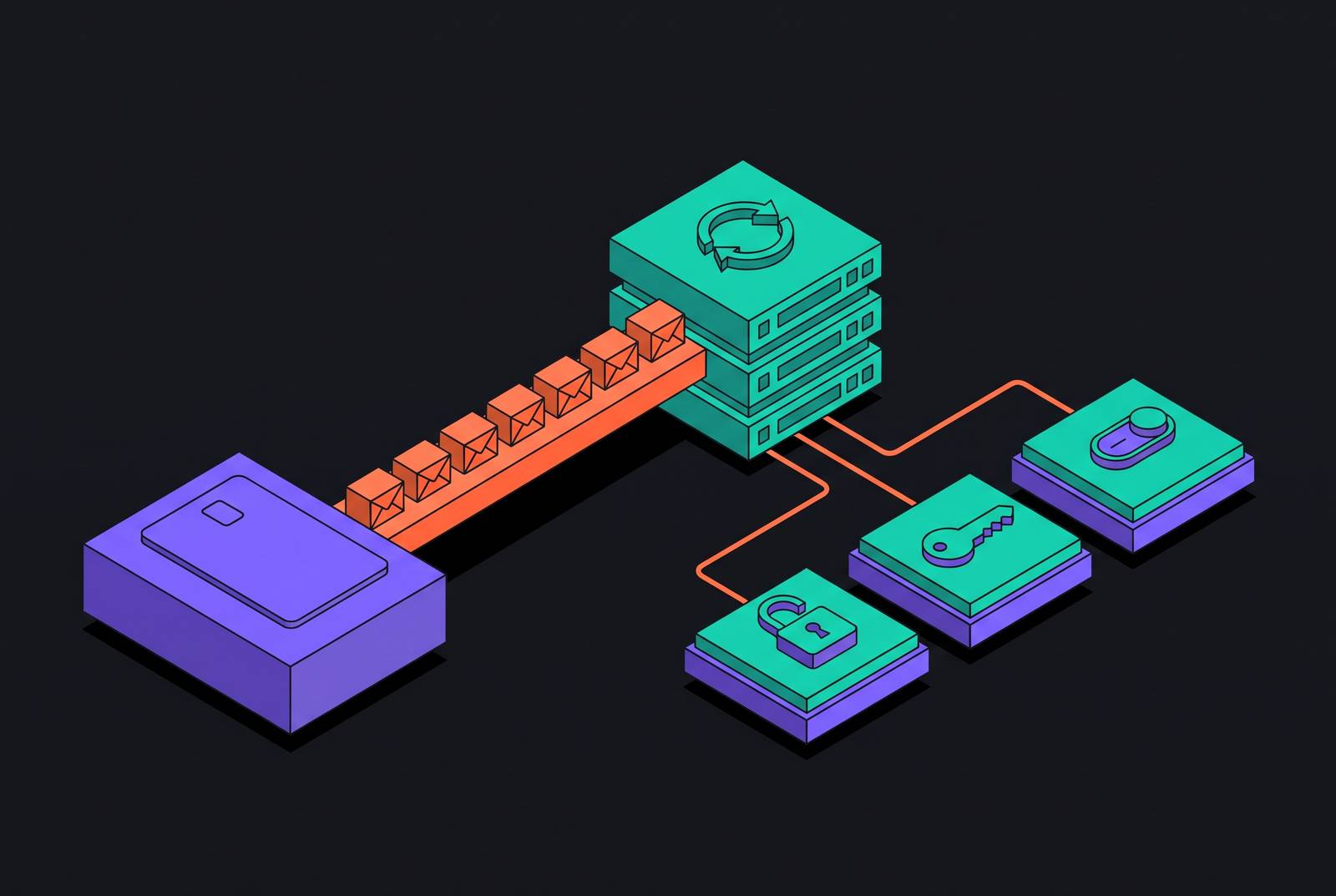
Synchronizing payment events with application entitlements takes more than a webhook handler that updates a plan. Reliable access depends on a connected system of signature verification, atomic idempotency, asynchronous processing, state-based writes, and reconciliation. Each layer closes a different failure path. Leaving one out can turn a routine billing change into an argument about why a paying customer cannot get through the door.
Why webhook delivery is unreliable by design, and what that means for entitlements
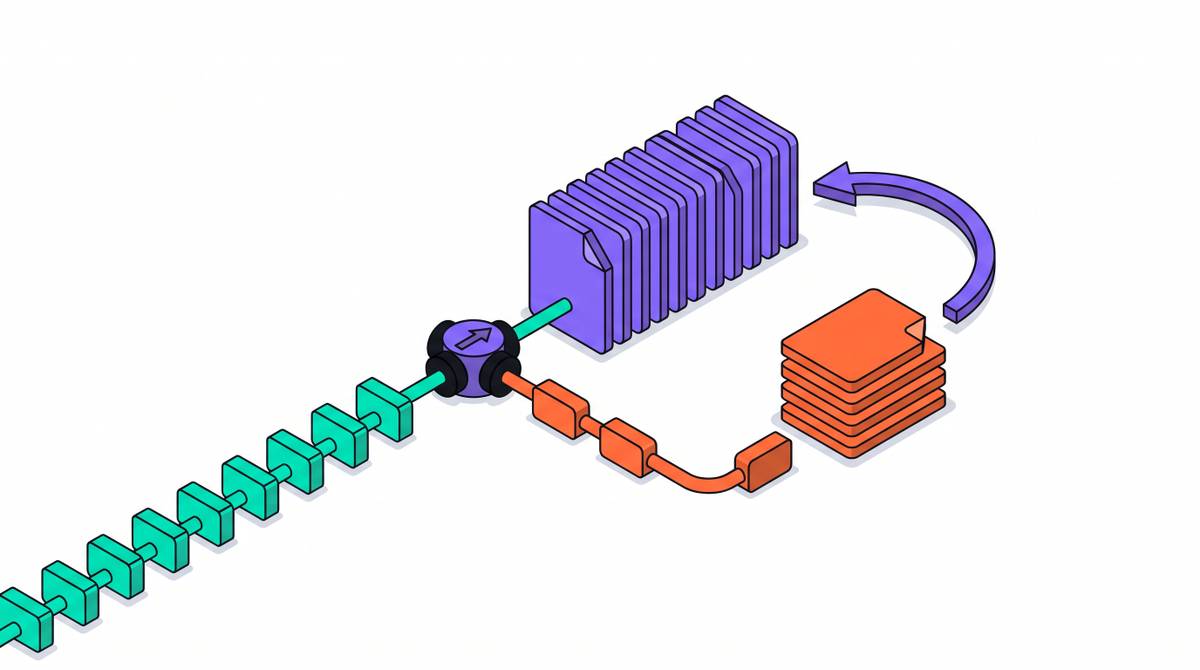
In a demo, an event fires and the application reacts. Production is less polite. Deliveries overlap, repeat, arrive late, and turn up out of order because networks fail, servers restart, and providers retry. At-least-once delivery is designed to send an event again to avoid losing it. It does not promise a tidy procession.
BoldSign describes duplicate deliveries, delays, out-of-order events, and retries minutes or even hours later in its 2026 guidance. From the provider’s perspective, retrying is the safe choice. From the application’s perspective, a retry is another copy of an event it may already have processed. A handler that assumes one arrival per event, in sequence, will eventually grant access that should be revoked or revoke access that should remain active. Those mistakes can go unnoticed until a customer complains or an audit finds them.
The payment events that drive entitlement state, and why the embedded payload cannot be trusted
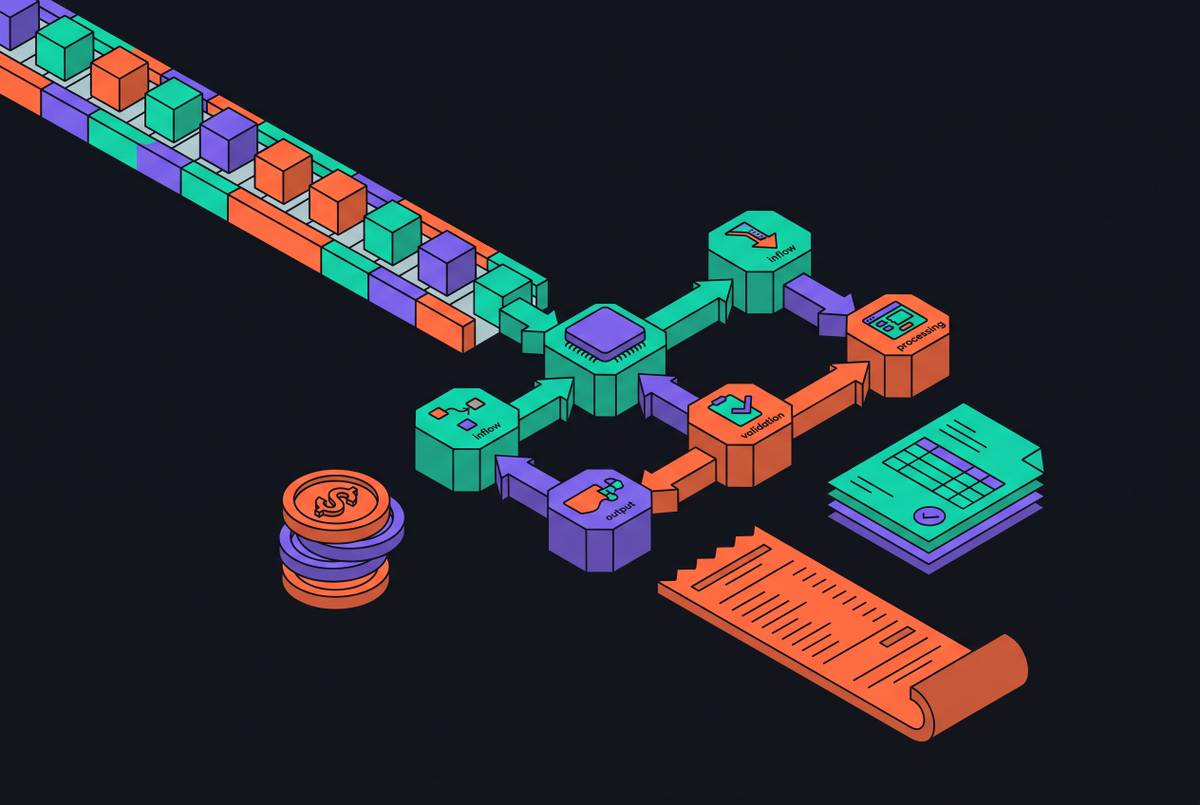
The set of events in the integration feeds one entitlement state machine. It includes checkout.session.completed, customer.subscription.created, customer.subscription.updated, customer.subscription.deleted, customer.subscription.paused, and customer.subscription.resumed. It also includes invoice.paid, invoice.payment_failed, invoice.payment_action_required, payment_intent.succeeded, and entitlements.active_entitlement_summary.updated. That last event fires when subscribing, changing, or canceling a plan changes the customer’s active entitlements.
The embedded object is a snapshot useful for routing and logging. The handler writes the subscription state as it is now. One team found that a customer who upgraded briefly appeared on the old tier because two update events arrived in reverse order. Re-fetching the subscription in every handler removed that symptom because the live resource reflected the current plan. The envelope was genuine. The news inside was old.
The Meter Events API records usage after it happens, so it cannot establish what access a customer has now.
Signature verification must happen before anything else, including idempotency checks
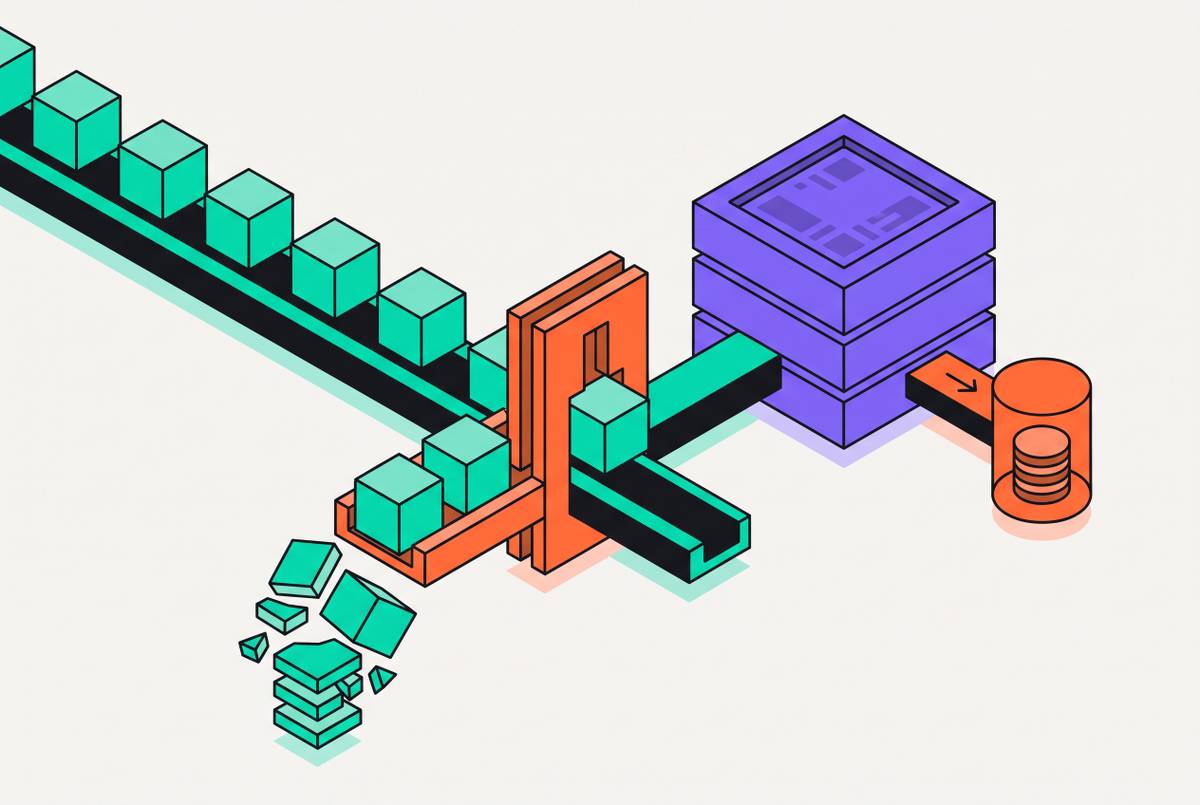
Before interpreting an event, the receiving endpoint must establish who sent it. Anyone who discovers the endpoint can send requests. Without signature verification, fake events could change billing state, so the handler must reject unauthenticated requests before they reach entitlement logic.
The signature mechanism uses a shared secret and a cryptographic hash, typically HMAC-SHA256. The handler recomputes the expected signature from the raw request body and compares it with the supplied signature. A mismatch ends processing before other logic runs. Where signatures include timestamps, checking their age can also reject requests outside a short threshold. The secret belongs outside source control and logs, and should be rotated if it may be compromised.
The signature check must also come before the idempotency check. Otherwise, an attacker can send a captured event ID and claim its deduplication key before the real delivery arrives. The real event then looks like a duplicate and gets silently dropped. The studiq implementation from 2026 verifies the raw-body signature before claiming the event ID, rejects livemode mismatches, and warns about API-version drift before entitlement logic.
Idempotency is the single most important guarantee, and it must be implemented atomically
An idempotent handler can run repeatedly without changing the result beyond the first successful application. That is the central guarantee that makes repeated delivery safe. Without it, every provider retry becomes another opportunity to repeat a money or access operation.
A naive check-then-process implementation leaves a race open. Two concurrent deliveries can both ask whether an event ID exists, both find nothing, and both start work before either records the ID. Each check is individually reasonable. Together, they provide no mutual exclusion, because the decision and the claim are separate operations.
The concrete recommendation is an atomic upsert against a unique event-ID key. The claim succeeds for one contender, while the conflict identifies the duplicate. The database’s locking on the unique index provides mutual exclusion, without an application-level lock that could leak after a crash. The studiq implementation claims event.id in its event table before any entitlement write.
Event-level protection is necessary, but it is not always enough. Two different event IDs can refer to one invoice, so both may legitimately pass event deduplication while representing the same business operation. Dual-layer idempotency adds a unique business key, such as invoice_id, on the entitlements table itself. The event key catches deliveries that repeat, while the business key catches effects that repeat across different events. Building both into the initial schema is much easier than retrofitting them after code already assumes that a fresh event ID means fresh work.
Acknowledge immediately, then process asynchronously — why synchronous handlers create their own failure mode
Even an idempotent handler can create avoidable delivery pressure if it does all its work synchronously. When processing takes too long, the provider times out, marks delivery as failed, and retries. Now the application receives more requests while it is already busy. Idempotency limits repeated effects, but it does not make those extra requests disappear.
The execution pattern is to acknowledge promptly with a 2xx response and hand the work to an asynchronous job queue for processing. BullMQ, Inngest, and Trigger.dev are production-used options for this pattern. The important division is between receiving the event and completing its downstream work. Database writes, email triggers, and CRM updates no longer need to finish within the provider’s request window. The queue absorbs backpressure when those systems slow down or become temporarily unavailable.
A new subscriber may need a CRM update, a welcome email, and an onboarding form, each coordinated with the rest. For solo founders and small teams, that coordination often becomes the first engineering wall. A job queue with retry logic is the standard answer, rather than asking one HTTP request to moonlight as a workflow engine.
State-based entitlement updates, not order-based ones — the architecture that survives out-of-order delivery
An asynchronous worker still cannot trust the order in which events arrive. Different network routes introduce variable latency, retries overlap newer deliveries, and concurrent workers amplify both effects. State-based processing loads the current resource state, checks whether the proposed transition is valid, and applies it only if it remains appropriate. Stale or backward updates are ignored. Re-fetching the subscription gets its current state, but the final write still needs protection.
An active-subscription handler first passes its latest-mirror check, then pauses. A newer cancellation handler writes the canceled subscription mirror and revokes access. The earlier handler resumes and unconditionally restores the paid plan. Both jobs finish successfully, yet the customer has access they should not have.
Subscription and entitlement updates need to be conditional on current state ownership, or committed through a single-winner fenced operation. That prevents a worker whose authority has been superseded from restoring stale access.
A starting entitlement row contains account_id, plan_key, features, limits, billing_status, period_end, and override_until/override_reason. The verified webhook processing path is the only writer of billing-derived entitlement state, while admin operations may write only the override fields. Separating those permissions keeps an administrative exception from becoming another competing account of the subscription.
The proappstore-online resolution dated October 28, 2026, shows a different schema for a multi-tenant design. It uses per-(app, product, subject) entitlements with product, subject, status, period_end, grace_until, renews, buyer_user_id, and updated_at. Its processing is idempotent on event ID and safe against out-of-order delivery. Entitlements are mirrored into _pas_entitlements in D1, where application SQL can read and JOIN them, but the linter refuses application writes.
Reconciliation as a safety net — what to do when all retries fail and an event is simply gone
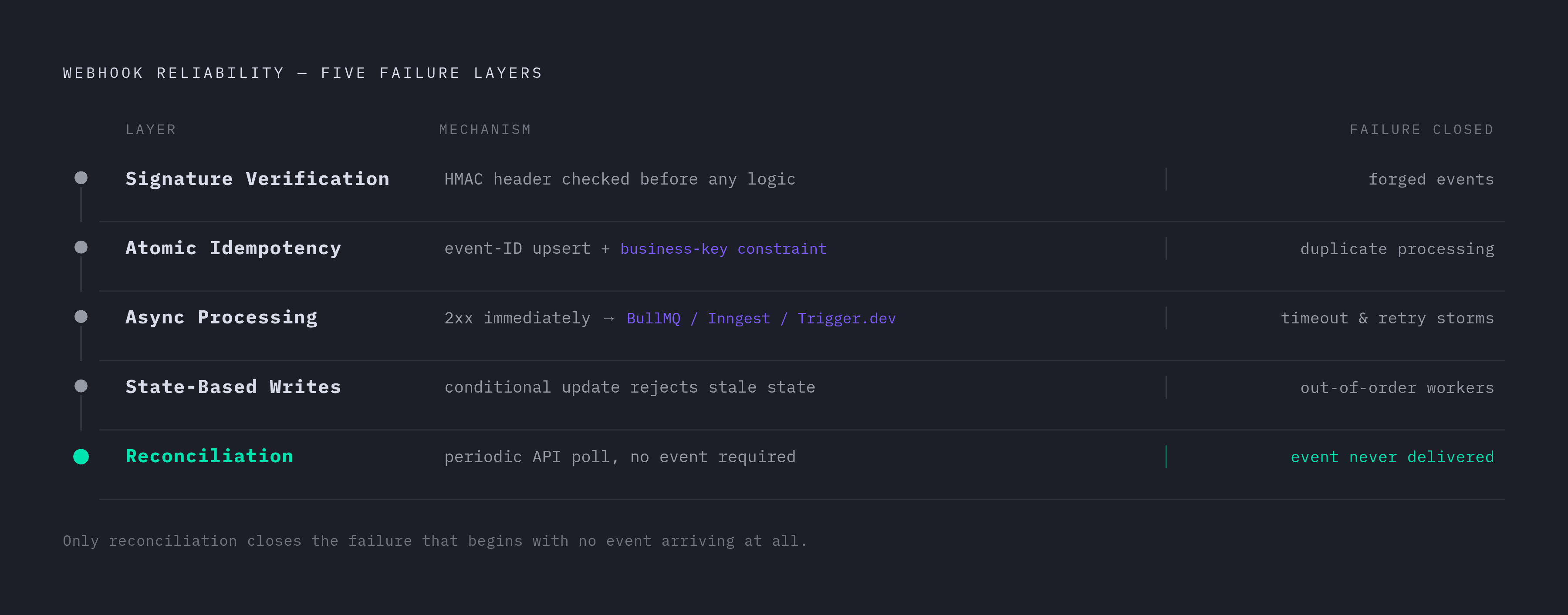
All the handler’s safeguards depend on an event reaching it. Retries can run out. If an endpoint stays down, consistently returns 5xx responses, or an event is lost in transit, delivery can be abandoned without a notification or alert. No amount of deduplication can process an event that never arrives.
Reconciliation closes that remaining gap by periodically fetching live subscription state from the billing API and comparing it with stored entitlements. Any divergence triggers a corrective write through the same state-based logic used by webhook processing, preserving the write guards.
The entitlement record should also hold only the data it needs. Minimal records reduce exposure and simplify deletion requests. That serves operational hygiene as well as GDPR compliance, where data minimization is a baseline expectation for SaaS infrastructure operating in or serving European users.
Where practitioners disagree and what the open questions still are
Teams disagree on whether to use the embedded payload for initial routing or have every handler fetch the live resource right away. Routing from the payload and re-fetching for writes gives teams speed without making the snapshot authoritative. The boundary is easy to blur under deadline pressure, however. Fetching immediately avoids that particular distinction, while payload-based routing keeps a useful role for data already present.
Polling offers a simpler consistency model, but frequent polling wastes resources and creates API rate-limit pressure, while infrequent polling delays changes. Webhooks improve timing and move complexity into delivery reliability. Some teams use both, with polling serving as reconciliation. The choice trades one kind of operational burden for another.
Dual-layer idempotency raises a further schema-design disagreement. Some teams see the business-key constraint as added complexity without enough extra protection. Others point to different-event-ID, same-invoice storms and the low cost of adding the constraint during initial design. How much schema protection a given integration needs for its business effects remains unresolved.
How agent-driven tooling is compressing setup time without solving correctness
Agent-driven tooling is shortening the path to a first handler in 2026, but a first handler is not necessarily a correct one. Generated code commonly uses synchronous processing and omits idempotency, state-based guards, or reconciliation. Faster scaffolding does not change delivery semantics, and a tidy function can still be a very efficient race condition.
The practical implication is to use the layered architecture as a checklist and review standard for generated work. Signature verification, atomic claims, asynchronous execution, guarded entitlement writes, and reconciliation need to work together. A unified backend that integrates payment events, user state, and entitlements can reduce the synchronization gaps where small teams miss a layer, provided those protections are built in. The goal is less unprotected space between billing truth and application access. When tooling supplies the first draft, understanding the architecture becomes more valuable, because correctness is still the part it cannot reliably supply.