Ordered Event Processing for Billing State Machines
Ensure billing events process in order to prevent revenue leaks.
Ordered Event Processing for Billing State Machines.
Why billing state machines fail before they hit scale
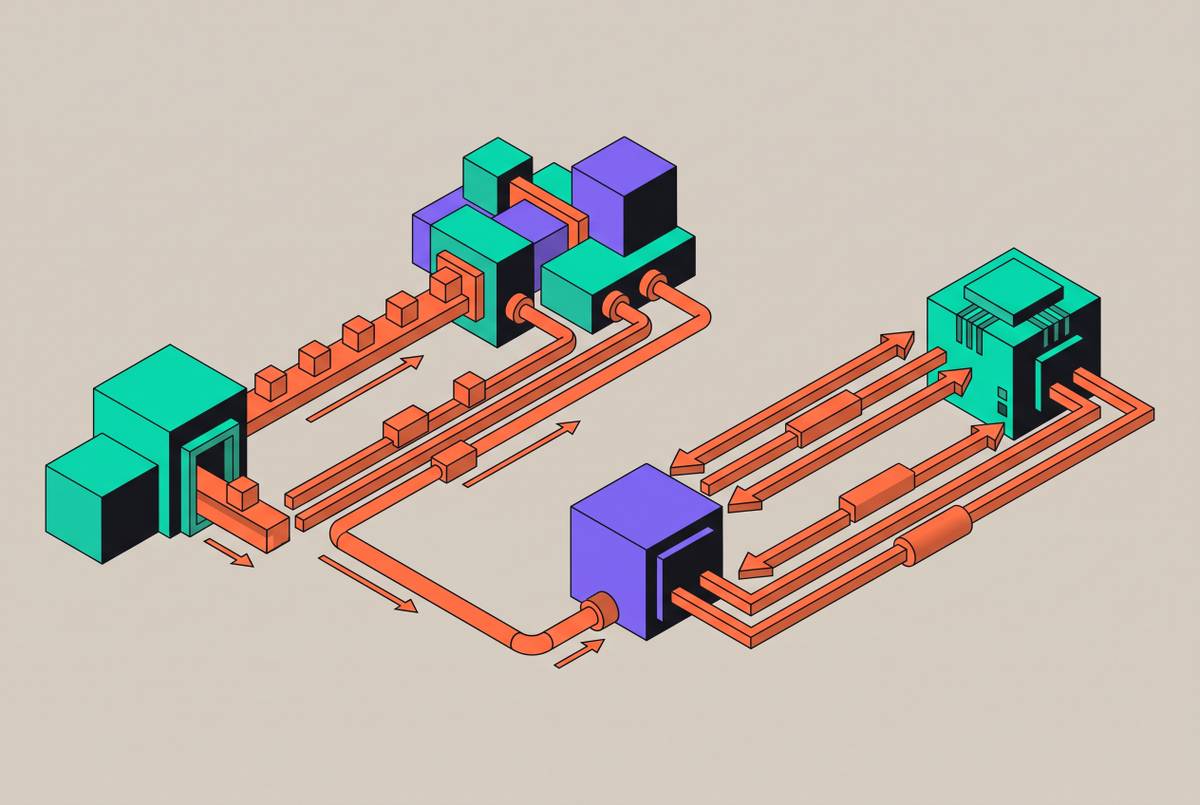
Billing state machines fail because of missing ordering guarantees, not missing features. Most engineers sketch the same clean diagram when they first design one: created, then active, then upgraded, then canceled, each state politely waiting its turn like customers at a deli counter. It's a nice picture. It also has almost nothing to do with how distributed systems actually behave once real traffic hits them.
The upgrade event reaches the billing consumer before the activation event it technically depends on. An upgrade event reaches the billing consumer before the activation event it technically depends on. The state machine, doing what it was told, tries to upgrade a subscription that (as far as it knows) doesn't exist yet. A wrong invoice, a ledger entry that doesn't reconcile, and quiet revenue leakage follow, unnoticed until finance asks why the numbers don't add up. It's a wrong invoice, a ledger entry that doesn't reconcile, and quiet revenue leakage that nobody notices until finance asks why the numbers don't add up.
Out-of-order delivery isn't some rare edge case that only occurs during a leap second or a solar flare. Out-of-order delivery is the default behavior of any system where events cross a network, sit in a queue, or get emitted by more than one service at the same moment, which describes basically every modern SaaS backend. Companies running 500 or more subscriptions typically automate the full billing reconciliation cycle to avoid revenue leakage from undetected metering errors https://automationatlas.io/guides/automation-for-saas-companies/.
Billing used to be the thing you patched together right before month-end close, a spreadsheet macro and a prayer. Not anymore. With AI products metering every token and every API call, and usage-based SaaS charging by the click, billing has turned into a real-time data problem. It's closer to the central nervous system of the company than a back-office chore. Treating it like an afterthought makes the nervous system start sending mixed signals, which is a polite way of saying customers get billed for things they didn't do, or don't get billed for things they did.
How stream processing enforces ordering at ingestion time
Stream processing means applying billing logic, metering, aggregation, rating, to usage events the moment they arrive, instead of piling them up for a nightly batch job to sort out later. The ingestion path generally works like this: a message broker (Kafka, Kinesis, Pub/Sub) receives the raw event, then stateful transformations take over, summing up API calls and turning raw signals into billable units. Modern billing platforms can process up to 15,000 billing events per second https://www.getlago.com/blog/events-based-billing.
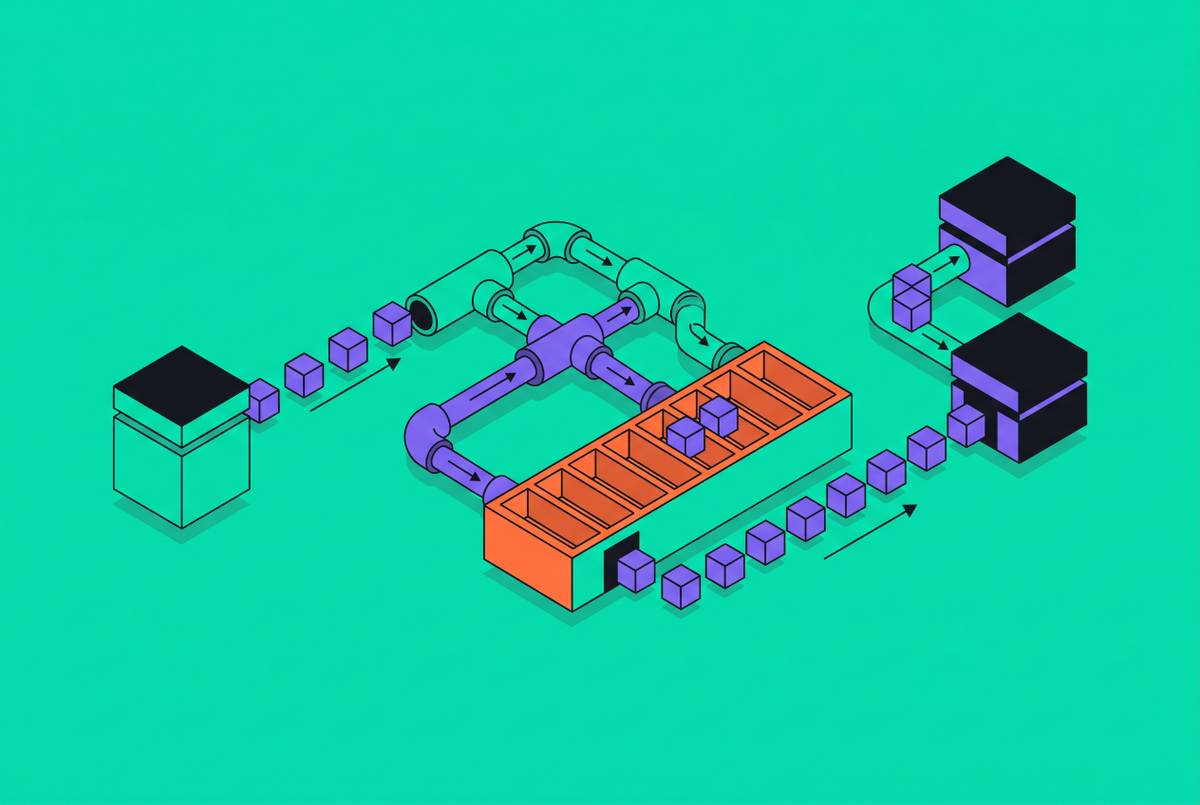
Apache Kafka sits at the center of most of these pipelines, and its log-based storage model is the reason ordering holds up under load. Events land in an ordered, append-only log, and consumers read that log in sequence, the same way you'd read a diary from page one instead of skipping around. Within a single partition, Kafka guarantees events arrive in the exact order they were written, since breaking that guarantee leaves the rest of the billing pipeline just guessing. That guarantee is the whole ballgame. Break it, and the rest of the billing pipeline is just guessing.
The retention model adds a second layer of insurance. Because Kafka keeps events around instead of deleting them the moment they're consumed, a billing team can replay the stream from any point in history. That matters more than it sounds like it should. Pricing rules change, someone discovers a billing error three weeks after invoices already went out, and replaying the log from the right offset delivers a clean fix instead of a support queue full of angry emails.
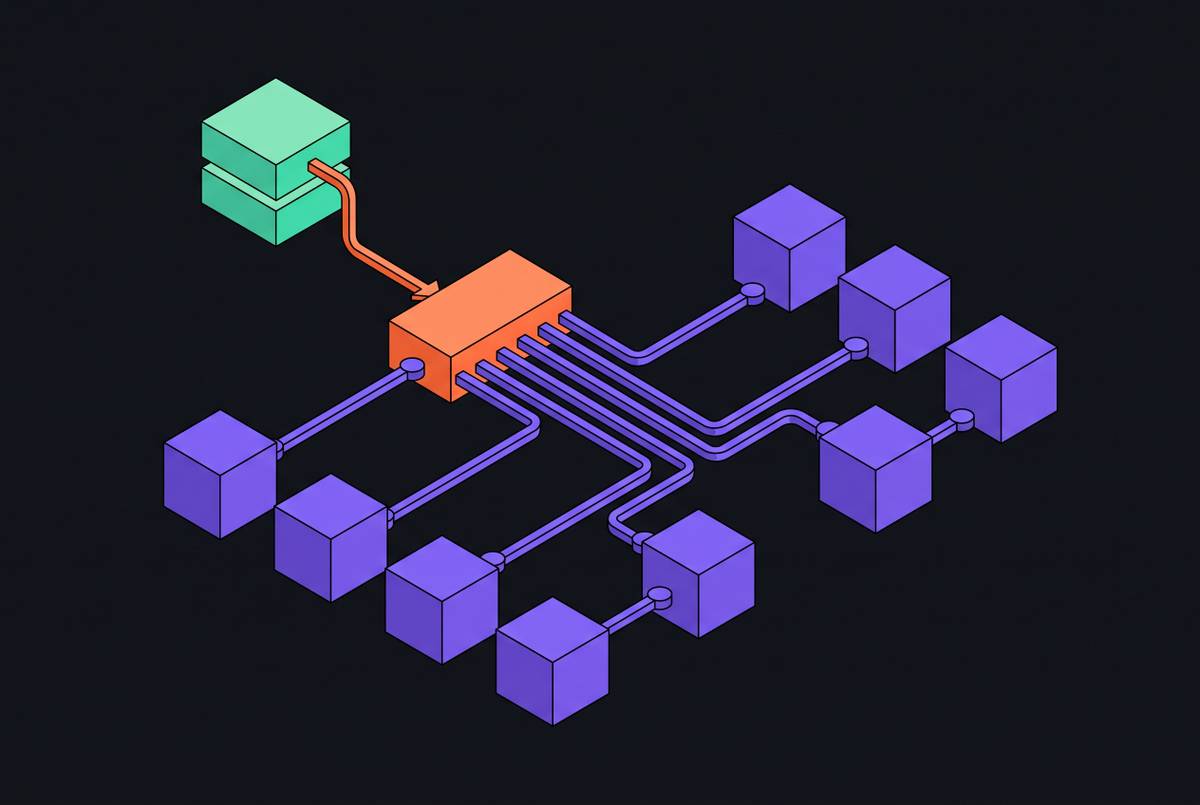
Kafka's consumer group model also lets multiple billing-adjacent systems, a real-time meter, an analytics warehouse, an alerting service watching for threshold breaches, read from the same stream independently, without one consumer's pace affecting another's. Each keeps its own offset. Nobody steps on anybody else's toes.
None of this matters, though, if events get lost or duplicated along the way. That's why production billing setups configure producers with enable.idempotence=true and use transactional IDs to coordinate writes across partitions. In a financial system, "probably exactly once" isn't a tier of service anyone should accept. Getting billed twice for the same API call isn't a bug report, it's a chargeback waiting to happen.
Event sourcing as the immutable record that makes ordering auditable
Event sourcing flips the usual database instinct on its head. Instead of storing the current state of a subscription and overwriting it every time something changes, the system stores every event that caused a change, in order, forever. A cancellation doesn't overwrite a current_status column. It appears as a SubscriptionCanceled event, appended to the log, sitting right next to every other event that ever happened to that subscription.
Want to know a customer's current balance? Replay the log. Want to know their subscription status? Replay the log. The current state of any billing entity is just the sum of everything that happened to it, read in the order it happened. Because nothing ever gets overwritten, there's no row to corrupt and no history to accidentally erase. The sequence is baked into the structure of the storage itself, not maintained by convention or hope.
That structural guarantee turns out to solve a problem that traditional databases have always been mediocre at: explaining themselves. It's often much worse at telling you why, especially once discounts, credits, and mid-cycle pricing changes start stacking on top of each other. An event-sourced system doesn't have that problem, because it can replay the exact sequence of events that produced every line item on the invoice, showing precisely how the billing logic was applied at each step.
That kind of replayability isn't a nice-to-have anymore. Enterprise customers run vendor audits and want proof, not vibes, and financial regulators reviewing billing practices want the same thing. An immutable, ordered event log gives you a receipt for the receipt.
CQRS: separating the write path that must be ordered from the read path that must be fast
CQRS sounds like a compliance form, but the idea behind it is refreshingly simple: writes and reads have completely different needs, so stop forcing one system to do both jobs badly. The write path handles commands that change billing state. The read path handles queries that retrieve it. They run as separate, independently optimized systems, and once you see billing this way, cramming both into one database starts to look a little silly.
The write side has zero tolerance for sloppiness. Ingesting usage events, generating invoices, processing payments, all of it needs strong consistency and full ACID guarantees. Eventual consistency is a fine trade-off for a lot of software. It is not a fine trade-off for "did we charge this customer correctly," which is why the write side typically runs on something like PostgreSQL, a database that has spent decades getting very good at not lying to you about transactions.
The read side wants the opposite thing. Customer billing portals, revenue dashboards, invoice history pages, none of these are mutating state, so they can tolerate a few seconds of staleness in exchange for speed. That's why the read side usually ends up as a small zoo of specialized tools: Elasticsearch handles full-text search, Redis handles caching whatever data gets hit the most, and ClickHouse handles real-time analytics queries that would make a regular relational database sweat. Each tool does one job well instead of every tool doing every job adequately.
The three pillars as a working billing pipeline
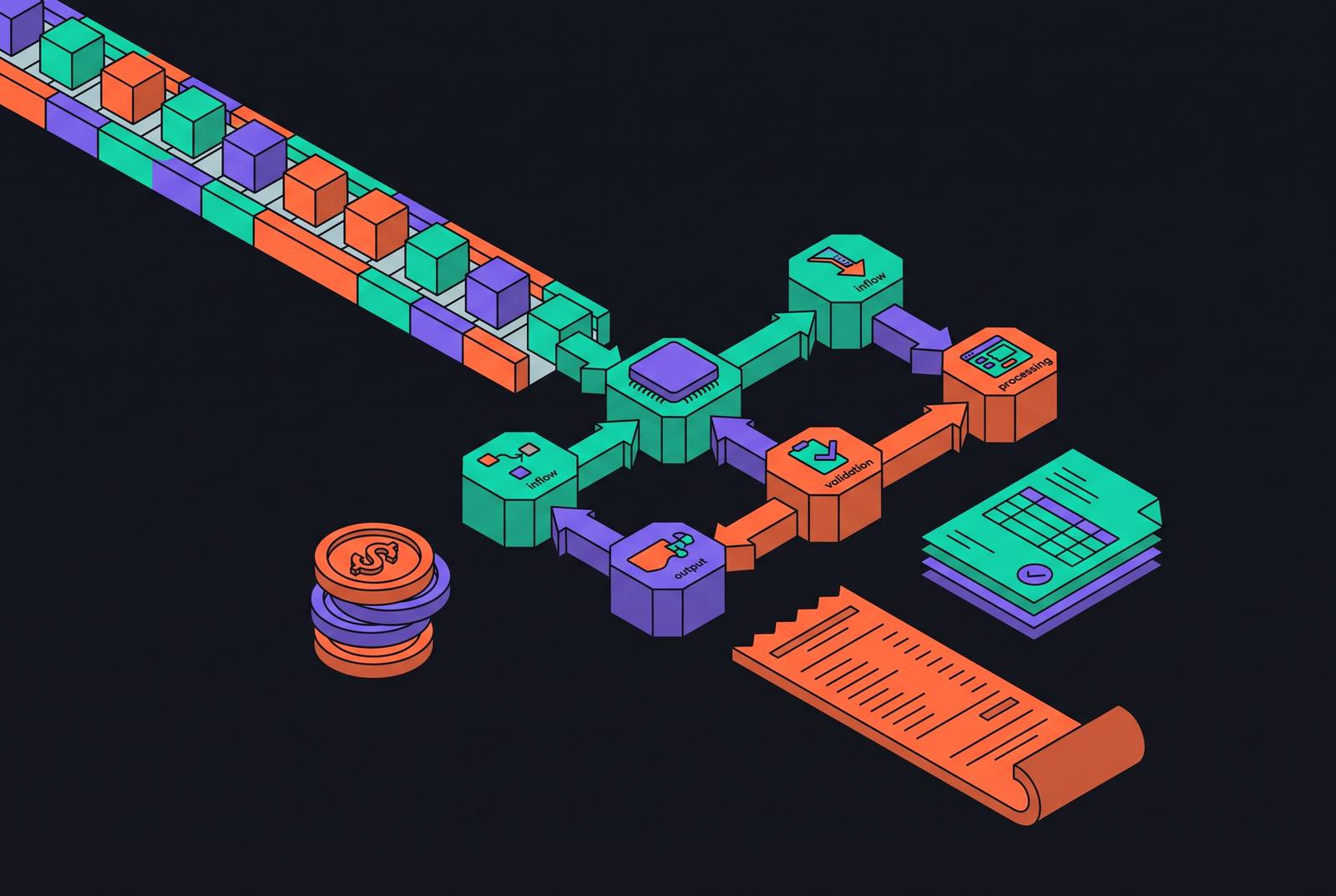
Tracing a single event through this whole stack makes the abstraction click. An AI API call finishes, and a usage event gets emitted, stamped with a timestamp and a customer ID. Kafka picks it up and drops it into an ordered partition, and that's the stream processing layer doing its one job: preserving arrival order. A billing consumer reads that event in sequence and appends a UsageRecorded domain event to the event store, which is the event sourcing layer quietly doing its job of recording an immutable fact that will never be erased.
From there, the write-side PostgreSQL database updates the customer's billing state atomically, and only after that succeeds do the read-side projections update asynchronously, the real-time usage meter ticks up, the customer portal balance refreshes, the analytics dashboard adjusts, each one served without fighting the others for a lock. That's CQRS earning its keep. Three separate mechanisms, one coherent pipeline, and ordering preserved at every handoff.
The recommended 2026 layer architecture for billing backends includes a Revenue and Payment Layer, handling invoices, dunning, tax calculation, and payment processing, plus a Reporting and Finance Integration layer that bridges to ERP and accounting systems for ASC 606/IFRS 15 compliance. The industry standard for this architecture is the Modular Monolith.
Webhooks are where a lot of this architecture gets tested for real. When the billing platform fires off a subscription_updated event, whatever internal system is mirroring that subscription's limits needs to reflect the change immediately, not eventually. The event-driven chain has to extend all the way to every downstream system that cares, or the whole ordering guarantee built upstream gets thrown away at the last mile.
Dunning is maybe the clearest example of why this all matters in practice. A failed payment should kick off a graduated recovery sequence: an immediate retry, an email at day three, a sterner email with an account restriction warning at day seven, and a grace period that expires at day fourteen. Every single step in that sequence depends on the prior state being correct. Get the ordering wrong, and a customer who already fixed their card gets a restriction warning anyway, or worse, a customer who never fixed anything keeps full access. Smart retry logic improves payment recovery rates by 7 to 12 percent above baseline, and automating billing and revenue recognition cuts invoice errors by 30 to 50 percent, freeing up 15 to 25 hours a month that finance teams save when revenue recognition is automated versus manual reconciliation https://ustechautomations.com/resources/blog/best-subscription-billing-software-for-saas-2026.
Market consolidation and its effect on the "ordering infrastructure" a team ships
Choosing billing infrastructure used to mean picking a piece of middleware and moving on. That's no longer really what's happening. A SaaS team evaluating billing options today is actually deciding how tightly its pricing logic, customer data, payment infrastructure, and revenue recovery systems should be welded together. That's a much bigger decision than it sounds like, and it's one a lot of teams make by accident, one integration at a time, without ever stepping back to notice they've made it.
Coupling has a cost that is visible specifically around ordering. When a billing engine and a payment processor are owned by the same vendor, the ordering guarantees, the ability to move your data elsewhere, and how flexible your pricing can get are all bounded by that vendor's internal architecture, not by anything the team building on top of it decides. Sometimes that trade is worth it. It's still a trade, and pretending otherwise is how teams end up boxed in two years later https://automationatlas.io/guides/automation-for-saas-companies/.
The pressure to get this right is only building. Every one of those usage events is a sequencing problem waiting to happen. The ordering challenge is growing louder as the industry matures. It's getting louder.
Hybrid pricing, subscription plus usage on top, is where this cost is highest, and also where companies running hybrid models post the highest median growth rate in the industry, 21 percent, ahead of either pure subscription or pure usage-based approaches https://www.withorb.com/blog/saas-trends. That's not a coincidence. Hybrid models are exactly the ones generating the trickiest ordering-sensitive events: commit drawdowns, overage triggers, tier transitions, all of which need to land in the right sequence or the invoice comes out wrong. The pricing model that grows fastest is also the one that punishes sloppy ordering hardest. That's not a fair trade, but it is the one on the table.
Unified backend infrastructure and billing correctness in practice
Fragmentation is where ordering guarantees go to die. When authentication, payments, customer data, and analytics each live in their own tool with their own webhook and their own sync logic bolted on afterward, ordering has to get re-established at every single boundary between them. Every one of those integration points is a place where sequence can quietly fall apart, and nobody designs a system hoping to add more of those.
The cost compounds quietly, too, which is what makes it dangerous. Every sync layer sitting between two disconnected tools is another spot where an upgrade event can beat an activation event to the finish line, where a dunning state machine acts on subscription data that's already stale, or where the revenue dashboard shows a balance that doesn't match what the write system actually recorded https://automationatlas.io/guides/automation-for-saas-companies/. None of these appear as a single dramatic outage. They appear as a slow drip of small discrepancies that someone in finance eventually has to explain, usually after the fact and usually at the least convenient moment.
A unified backend removes the boundaries instead of trying to patch them. Authentication events, payment events, and usage events all attach to a single customer record, so there's no cross-system sync that can drift or fall behind. The event log itself is unified, so ordering gets enforced exactly once, at the system's edge, instead of being re-implemented independently at every integration point where it could quietly go wrong. Read projections, whether that's the billing portal, the analytics dashboard, or an entitlement check gating a feature, all pull from that same ordered source, so there's no version of "which system is telling the truth" to argue about.
That's the practical case for treating ordering as a foundation to build on rather than a problem to firefight system by system. It's a bet that nothing will slip, made fresh every day. Correctness that's built into the architecture itself doesn't need anyone to win that bet, because there's no bet left to make. Tiun is built specifically for this model: authentication, payments, customer database, and AI analytics in a single cohesive system, the architecture that makes billing state machines correct by design rather than by coordination. Companies with real-time billing visibility report 18% lower involuntary churn compared to companies that process usage only at end-of-month https://getlago.com/blog/real-time-billing-stream-processing-event-sourcing-cqrs. 59% of software vendors expect usage-based models to increase as a portion of revenue, up from 41% in 2023 https://www.withorb.com/blog/saas-trends. Usage-based pricing now accounts for 42% of preferred pricing methods among SaaS buyers, surpassing traditional subscriptions https://www.withorb.com/blog/saas-trends. Companies that include usage-specific data in trial reminders report higher conversion rates than those sending generic reminders, at 12-18% https://automationatlas.io/guides/automation-for-saas-companies/. Employee IT setup time was reduced to under 15 minutes per hire through automation https://automationatlas.io/guides/automation-for-saas-companies/. Manual intervention was still needed for about 8% of edge-case billing disputes after automation implementation https://automationatlas.io/guides/automation-for-saas-companies/.