Tax Compliance Automation Tools for SaaS Businesses
SaaS tax compliance splits into three layers most founders miss until authorities arrive.
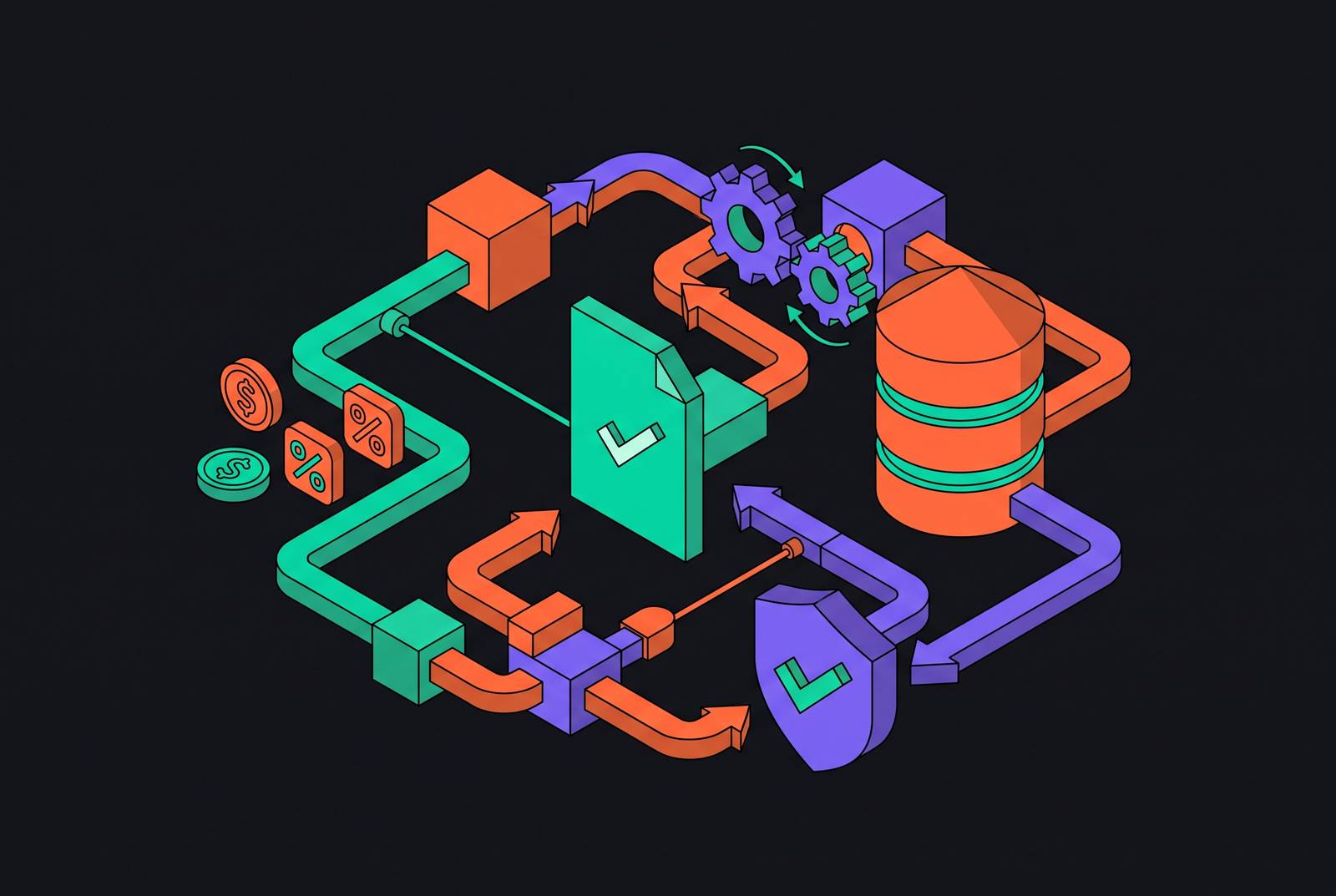
SaaS tax compliance is three problems wearing a trench coat. Digital services get taxed differently than physical goods almost everywhere, the rules shift state by state and country by country, and growing companies cross revenue thresholds fast, sometimes without noticing until a letter from a state tax authority shows up in the mail.
AI companies have it worse. Subscription and API-usage revenue piles up across thousands of tiny transactions, so economic nexus thresholds get crossed quicker than a founder can say "wait, we owe tax in Ohio now?" Here's the part that catches people off guard: there's no AI carve-out anywhere in the tax code. Most states just apply their existing digital service rules to AI products and call it a day. Billing model matters too, since flat monthly invoices, annual contracts, and usage-based billing each need their own tax logic, and a system built for one doesn't just translate to another.
Picture the moment a founder finds out about multi-state nexus exposure. It plays out like a water stain on the ceiling: fine, fine, fine, then suddenly four state tax authorities and a very expensive contractor are involved. The SaaS market hit $184 billion in 2024, so this compliance gap stopped being a niche problem a while ago. It's a scale problem, and it gets worse as revenue grows, billing models shift, and new markets open.
The manual alternative to all this is exactly what it sounds like: spreadsheets, cross-referenced threshold tables, and exemption categories tracked by hand across every market. It works until it doesn't, and the moment a Merchant of Record provider takes over, that entire effort becomes unnecessary.
The three distinct layers of tax obligation every SaaS founder actually faces
Most founders lump tax compliance into one bucket. That's the first mistake, and it's exactly how gaps form, because tax compliance is actually three separate jobs stacked on top of each other.
First: jurisdiction determination. Tracking nexus thresholds and knowing the moment a new registration obligation kicks in, before it turns into a violation instead of a to-do item.
Second: tax calculation at the point of sale. The right rate, applied in real time, based on product type, customer location, and any exemptions in play. Usage-based and hybrid billing make this layer genuinely hard, since the invoice total isn't fixed and shifts with every billing cycle.
Third: filing and remittance. Returns get prepared, submitted to the right authority on time, and records stay clean enough to survive an audit. This is the layer where penalties actually land when something slips.
AI companies add a fourth wrinkle without meaning to, since they sit on both sides of the transaction, paying VAT on the infrastructure and API costs they buy while charging customers on the other end. Both sides carry their own compliance weight. It's a toll bridge that charges itself a toll every time it lets a car through.
Most point tools handle one or two of these layers well and leave the rest for the founder to sort out by hand. Figuring out which layer is your actual gap has to come before picking any tool at all, not after. Ask a founder how many layers of tax obligation they think they have, and most say one. Ask again after the first multi-state notice, and suddenly it's three, plus a headache.
What dedicated tax automation platforms actually do, and where each is strong
Dedicated tax automation tools plug into billing and ERP systems, calculate tax in real time, and handle filing. That beats manually keying in rates and filing quarterly by hand, which is still how a surprising number of smaller SaaS companies operate. Doing it that way is a bit like scoring your fantasy football team with a pencil and a prayer: technically possible, deeply unwise once you're past a handful of transactions.
A few platforms worth knowing:
Anrok is built specifically for SaaS. Real-time nexus monitoring, automated filing, native plugs into billing platforms. Implementation tends to run in weeks, not months, without much engineering lift.
Kintsugi takes an AI-native approach, using machine learning to pull data, catch errors, and classify product tax codes automatically. It tracks nexus in real time and can auto-register once a threshold is hit, which suits teams that want the categorization busywork done for them.
Sphere charges flat per-jurisdiction pricing with no hidden fees, and uses AI agents to handle registration and filing across tax authorities. Built for SaaS companies with international ambitions.
Numeral automates registration, filing, and remittance, and includes a virtual mailbox for tax authority notices. It also backs a filing deadline guarantee, covering penalties if a deadline gets missed.
TaxJar covers a wide range of e-commerce and SaaS use cases, with automatic nexus tracking and return filing, plus integrations across most major billing and commerce platforms.
Here's the catch that applies to all five: they're strong on calculation and filing, but they sit on top of existing payment infrastructure. They own the tax logic, not the transaction itself. That's a real gap, because if the billing system feeds them incomplete or inconsistent data (which happens constantly when auth, payments, and customer records live in three different tools) the tax layer just calculates wrong numbers faster. Garbage in, garbage out applies here like anywhere else in software; feed it junk, and it hands the junk back to you wearing a nicer suit.
Before picking one, check real-time calculation versus batch processing, international VAT/GST coverage, support for usage-based billing, how fast it actually implements, and whether it handles registration or just calculation.
How the Merchant of Record model shifts the compliance burden entirely
A Merchant of Record, or MoR, is the legal entity that sells to the customer and owns the whole transaction: payment processing, invoicing, tax calculation and remittance, chargeback handling, regulatory compliance, all of it. The software company keeps the product and the customer relationship, while the MoR owns everything underneath. It's the difference between owning a restaurant and owning the building, the plumbing, and the health inspector relationship the restaurant depends on. One is the storefront; the other is what's holding it up.
For any company selling into more than a couple of countries, standalone tax tools carry a real limitation: they calculate the tax correctly and still leave someone on staff registering for VAT in each new market by hand. That handoff to an MoR eliminates that work outright. No VAT or GST registration is needed in each new market, since the MoR is already registered there, and filing and remittance become the MoR's job. Chargeback disputes and tax law changes across a dozen jurisdictions stop being things anyone has to track personally.
The part people underrate is speed to market. Instead of spending months learning the tax rules of a new country before selling there, a company on MoR infrastructure can start selling right away, because the compliance groundwork already exists.
The tradeoff is real, so say it plainly: some control over checkout branding and the billing experience gets handed over too, since the MoR shows up as the seller of record. That can dent brand cohesion if nobody plans for it. On the other hand, because MoRs already run billing and compliance together, they tend to handle pre-billing notifications and subscription disclosures more reliably, and those small details move retention numbers more than most founders expect.
Some MoR providers combine European hosting and GDPR compliance into the infrastructure itself, which means compliance is handled at the transaction layer rather than layered on afterward. For founders who want that kind of integrated approach, it is worth evaluating whether an MoR candidate covers both obligations together.
How usage-based and hybrid billing models stress-test both approaches
Usage-based pricing is close to the default now. A January 2025 survey found 85% of SaaS companies had adopted some form of it, and per Maxio's 2025 SaaS Pricing Trends Report, hybrid models (subscription plus consumption) post the highest median growth rate of any pricing strategy, at 21%. The billing model most likely to drive growth is also the hardest one to tax correctly, and that's not a coincidence anyone should be comfortable with.
The reasons stack up fast. Usage-based invoices change every billing cycle, so tax calculation has to run dynamically instead of off a pre-set rate. Mid-cycle upgrades, overages, and credits each need correct tax treatment the moment they happen, not after the fact.
For standalone tax tools, this puts real weight on the connection between the billing engine and the tax layer. A failed webhook, a schema mismatch, a delayed event: any one of those and the tax calculation comes out wrong. The integration stops being a nice-to-have and becomes something the business depends on structurally.
MoR-backed infrastructure handles this differently. Tax calculation happens right at the transaction layer, where the billing event gets created in the first place, so there's no second system to sync with and no gap to fail. That structural advantage is hard for standalone tools to match, no matter how good their calculation engine is.
The takeaway for anyone picking infrastructure: the more complex the billing model, the more that sync problem between payment and tax systems costs in engineering time and compliance risk. Usage-based billing complicates every tax calculation riding on top of it, not just revenue. Usage-based billing and tax logic make an odd couple: one wants to change every hour, the other wants a fixed rate to hold still for thirty days, and somebody has to referee that argument every billing cycle.
The data quality problem that sits underneath every tax tool
Every tax automation tool is only as good as what it's fed. Customer location, product type, billing event timing, exemption status: none of it is optional, and all of it feeds the calculation.
When auth, payments, and customer records live in separate systems, each with its own schema, things drift. Customer location in the auth record might not match the billing record, and product classification might not carry over cleanly between systems. Usage events arrive out of order, or just get dropped, and the tax base ends up quietly incomplete.
This isn't some rare edge case. It's the normal condition of a SaaS stack stitched together from single-purpose tools, synced by webhooks that offer no guarantee of delivery. Less a data pipeline, more a game of telephone played by four systems that don't speak the same language, and one of them keeps leaving early. Things fall through, and nobody notices until reconciliation.
Audit readiness makes this worse. Tax authorities expect one coherent transaction record. When that record gets assembled after the fact from three or four different systems, gaps and mismatches show up, and explaining them to an auditor is nobody's idea of a good afternoon.
A single database where user records, billing events, and session data all live together removes the sync problem at the root, since there's nothing left to sync in the first place. An architecture that treats authentication, payments, and the customer record as one system means whatever compliance layer sits on top gets consistent data by construction, not by hoping the webhooks all fired correctly.
What GDPR and European data obligations add to the compliance picture for SaaS
Tax compliance and data compliance are separate legal obligations that come from the exact same transaction. A customer in Germany triggers VAT collection requirements and GDPR data handling requirements at the same moment, from the same checkout.
GDPR brings its own list: a lawful basis for processing data, data subject rights like access, deletion, and portability, data processing agreements with any sub-processors, and breach notification requirements if something goes wrong. None of that overlaps with tax law, yet all of it applies to the same customer record.
Data residency matters more than most US-based founders expanding into Europe expect. Where customer data physically sits determines which regulatory regime governs it and what rules apply to moving it across borders. A GDPR policy document only carries so much weight; the real distinction is where the data actually lives and who can access it.
For anyone evaluating an MoR provider, this cuts twice. If that MoR also processes customer data, it needs a valid Data Processing Agreement in place. Hosting that data in Europe removes an entire category of cross-border transfer risk before it becomes a problem instead of after.
An MoR provider that combines European hosting with built-in GDPR compliance covers this ground directly, letting founders treat tax compliance and data compliance as one posture instead of two separate projects bolted together after the fact.
How to decide which approach fits your current stage and architecture
Here's the actual rule: if the payment stack isn't locked in yet, don't bolt a standalone tax tool onto it. Everything else is detail underneath that.
Standalone tax tools like Anrok, Kintsugi, Sphere, or Numeral earn their keep when the payment infrastructure is already locked in and isn't changing, when the billing model is fairly stable, and when the data pipeline feeding the tax tool is clean. They're also the right call for teams that want fine-grained control over tax logic while leaving everything else untouched.
MoR-backed infrastructure fits a different situation: early-stage companies whose payment stack isn't locked in yet, businesses selling internationally (or planning to) where compliance shouldn't slow down expansion, and teams that want compliance built into the system rather than maintained as a separate layer. It's the better fit when billing is usage-based or hybrid and changing often, since the tax logic then lives right where the billing event originates instead of one step removed from it.
A few questions worth asking about the current setup: if a webhook between the billing system and the tax tool fails tonight, is there any way to know? Who on the team owns the registration obligation when a new market opens, and how long does that process actually take? Is customer location data even consistent across auth, billing, and tax systems right now?
Tiun is worth evaluating for founders who want payment processing, MoR-based tax compliance, authentication, and a single customer database in one system, particularly for teams building toward European markets or looking for GDPR compliance without assembling it piece by piece.
Tax compliance automation is only as strong as the infrastructure sitting underneath it. The more scattered that infrastructure gets across separate tools, the more compliance turns into an ongoing maintenance job instead of a problem that actually stays solved.